
Cleaner indoor air without choking the airflow
Indoor Air Quality without the guesswork
Indoor Air Quality
Start with the pollutant, source, and HVAC system
Indoor-air concerns can involve outdoor dust, tracked soil, pets, cooking particles, smoke, remodeling material, stored chemicals, moisture, inadequate exhaust, leaky returns, or a poorly sealed filter rack. No single device handles every gas, particle, odor, or moisture source. Temperra begins by identifying the concern, where and…
WHAT TO KNOW
Filter performance depends on airflow and fit
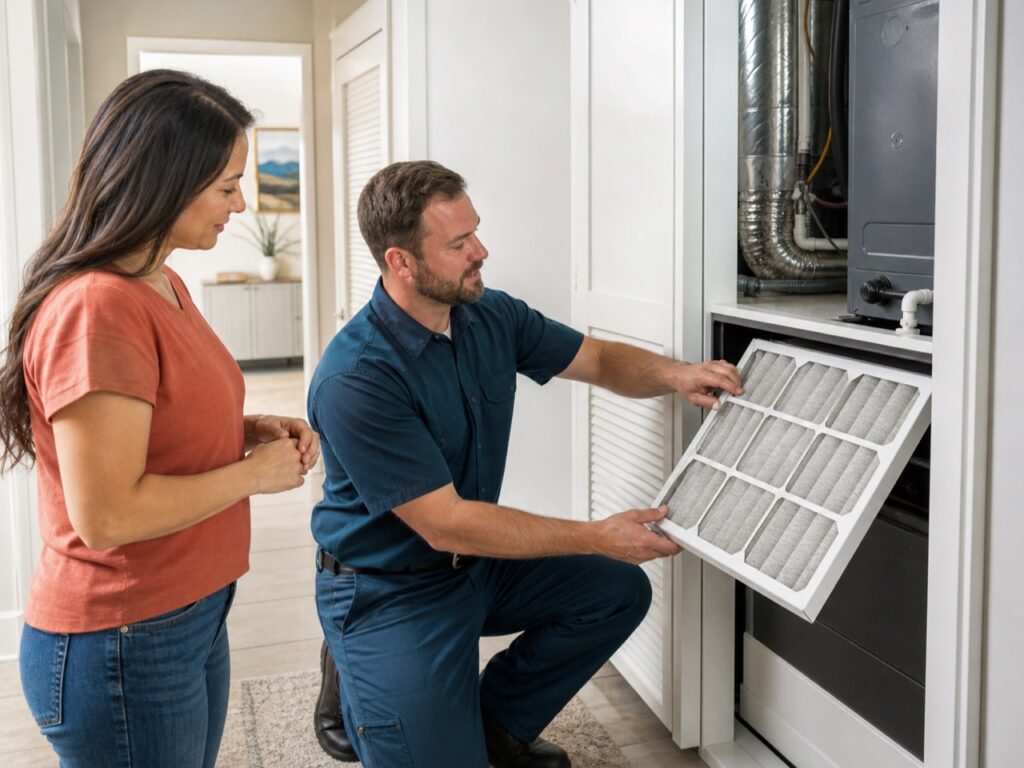
A filter's MERV rating describes particle-capture performance under test conditions; it does not show whether a particular return system has enough filter area or blower capability for that filter. A narrow filter in a small rack may load quickly or create more pressure drop than a larger media cabinet. Gaps around the…
WHAT HAPPENS NEXT
Ventilation and exhaust solve different problems than filtration
A recirculating HVAC filter captures particles carried through the return; it does not remove every indoor source or guarantee enough outdoor air. Kitchen and bath exhaust, dryer venting, building leakage, fresh-air equipment, and pressure relationships affect how air enters and leaves the home. Adding outdoor air also adds a heating and cooling…

Indoor Air Quality
Choose the right indoor-air fix
Choose air-cleaning equipment by the job it can do
Media filters, electronic air cleaners, adsorbent media, ultraviolet equipment, and portable room units address different targets and have different placement and maintenance requirements. Claims about particles, odors, gases, or biological growth should be tied to the specific product and application, not treated as a general promise about the air in the house. Ultraviolet equipment, for example, depends on wavelength, intensity, exposure, placement, and keeping the source and target surfaces clean; it is not a substitute for filtration, moisture correction, or source removal. Temperra compares the stated purpose, system compatibility, pressure drop, electrical requirements, replacement parts, cleaning schedule, and access before an accessory is included in the HVAC scope.
What to bring to an indoor-air review
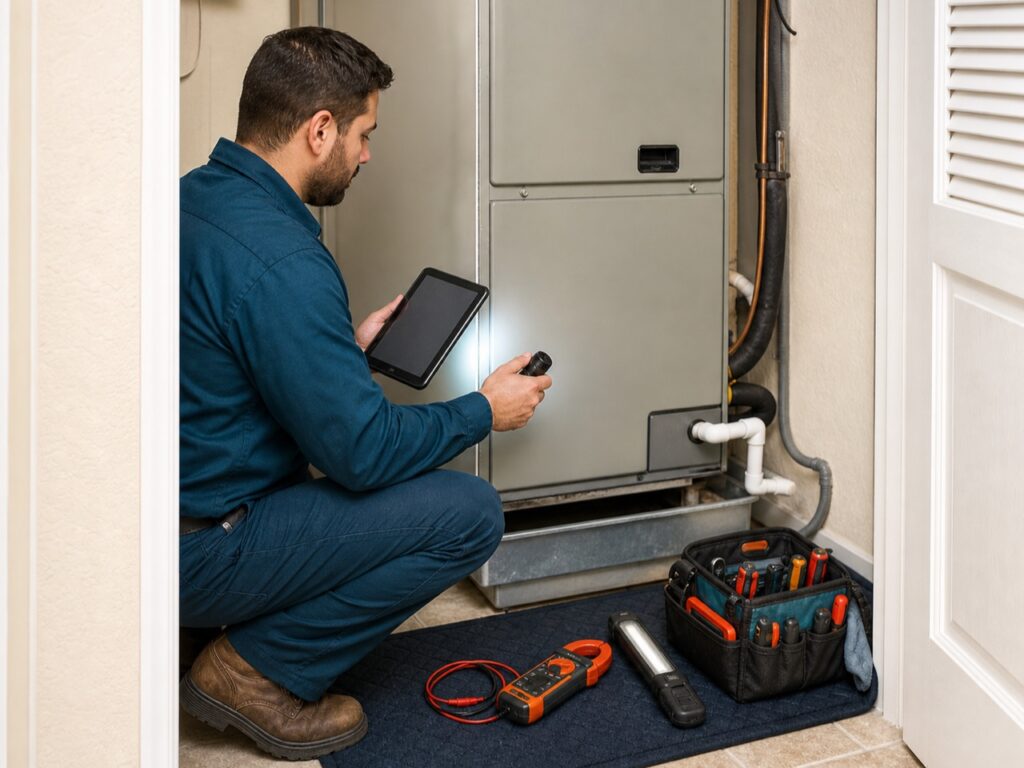
Describe the concern in observable terms: visible dust, odor, smoke, particles, moisture, filter loading, room location, or a time of day or season when it appears. Note pets, recent remodeling, new furnishings, cooking or hobby activities, open-window habits, exhaust problems, water events, and any portable devices already used. Bring filter size and photos of the filter rack, returns, thermostat, and existing accessories when they are safe to take. Medical symptoms require a qualified health professional; an HVAC assessment can evaluate airflow, filtration, ventilation, visible equipment condition, and practical system options, but it does not diagnose a medical condition or certify that indoor air is free of contaminants.
Indoor Air Quality: common questions
Not automatically. The filter must fit the rack and the system must have enough filter area and airflow capacity. A restrictive or loaded filter can reduce airflow, so pressure drop and system compatibility matter with particle capture.
Some filters or adsorbent media can help with specific compounds, but source removal, exhaust, cleaning, moisture correction, and ventilation may be more important. The source and type of odor should be identified before equipment is selected.
No. Ultraviolet performance depends on product, intensity, exposure time, placement, cleanliness, and the target. It should be evaluated for a defined application and does not replace filtration, drainage, moisture control, or source removal.
An HVAC review can inspect system airflow, filtration, drainage, visible equipment condition, and ventilation options. Mold assessment and medical diagnosis require the appropriate qualified professionals. Do not rely on HVAC equipment alone to resolve an unidentified health or building problem.