

AC repair that starts with the right diagnosis
AC Repair without the guesswork
Air Conditioning Repair
What an AC diagnostic visit tests
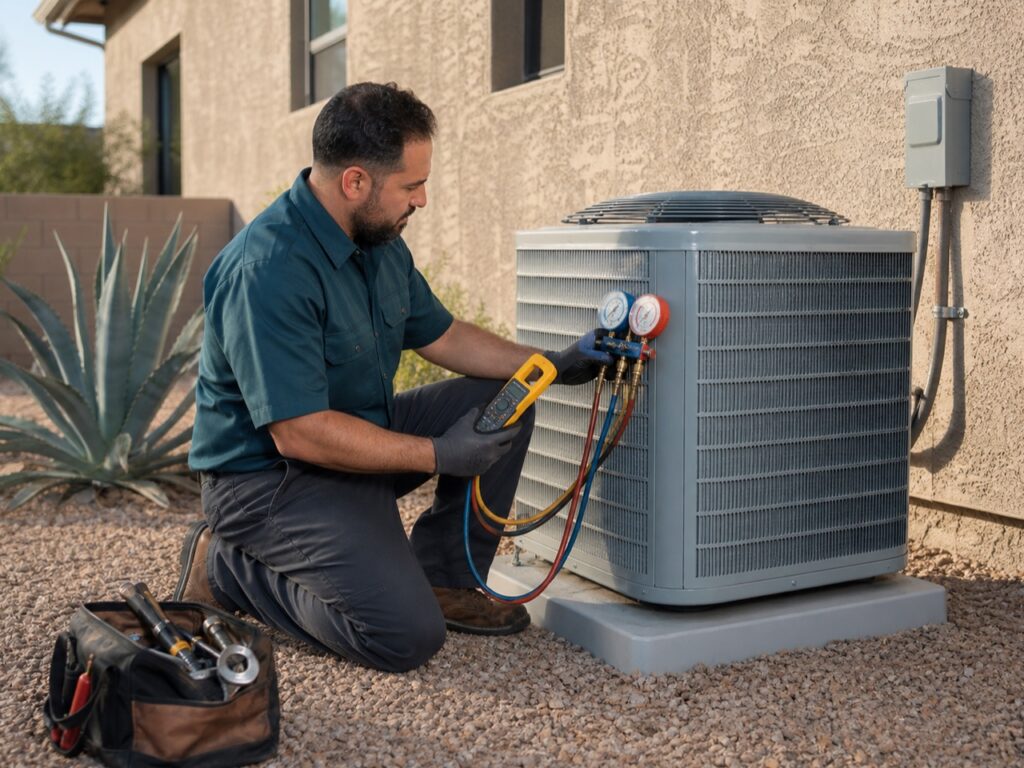
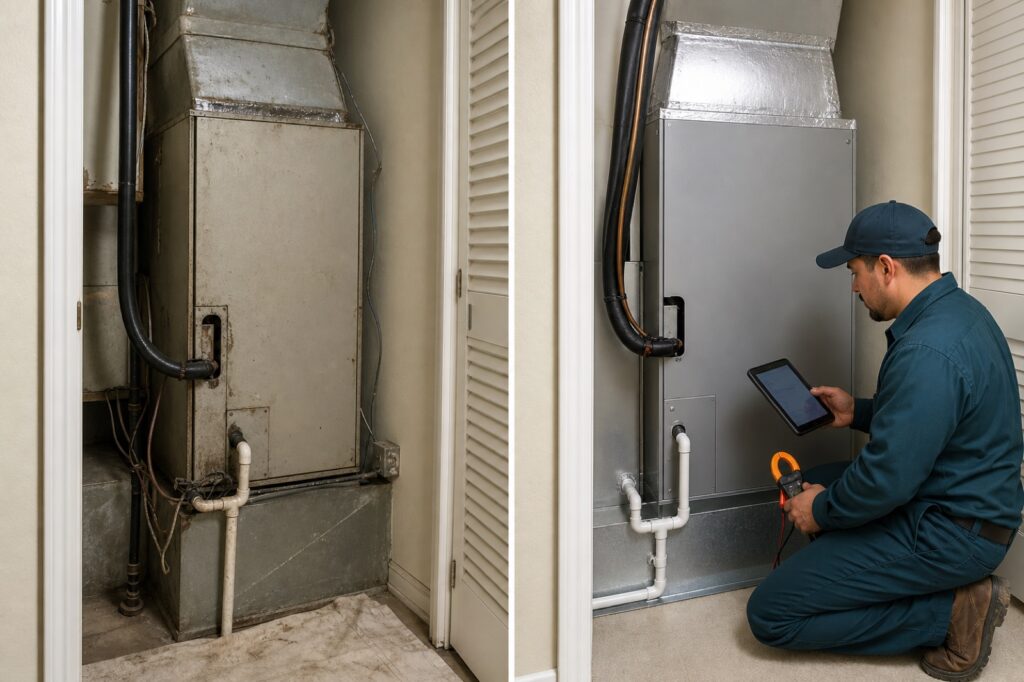
The diagnostic starts with the thermostat call and follows power and control voltage through the air handler or furnace and outdoor unit. Depending on the symptom, the technician may inspect the disconnect and breaker condition, contactor, capacitors, motors, compressor operation, control board, safety switches, blower, filter,…
WHAT TO KNOW
Common causes of a no-cool call
A failed capacitor can keep a compressor or fan motor from starting. Burned contactor points can interrupt power. A clogged filter, stopped blower, dirty evaporator, collapsed duct, or restrictive return can reduce airflow and allow the coil to freeze. Condensate backups may open a float switch and stop cooling to prevent water…
WHAT HAPPENS NEXT
A frozen coil is a symptom, not the repair
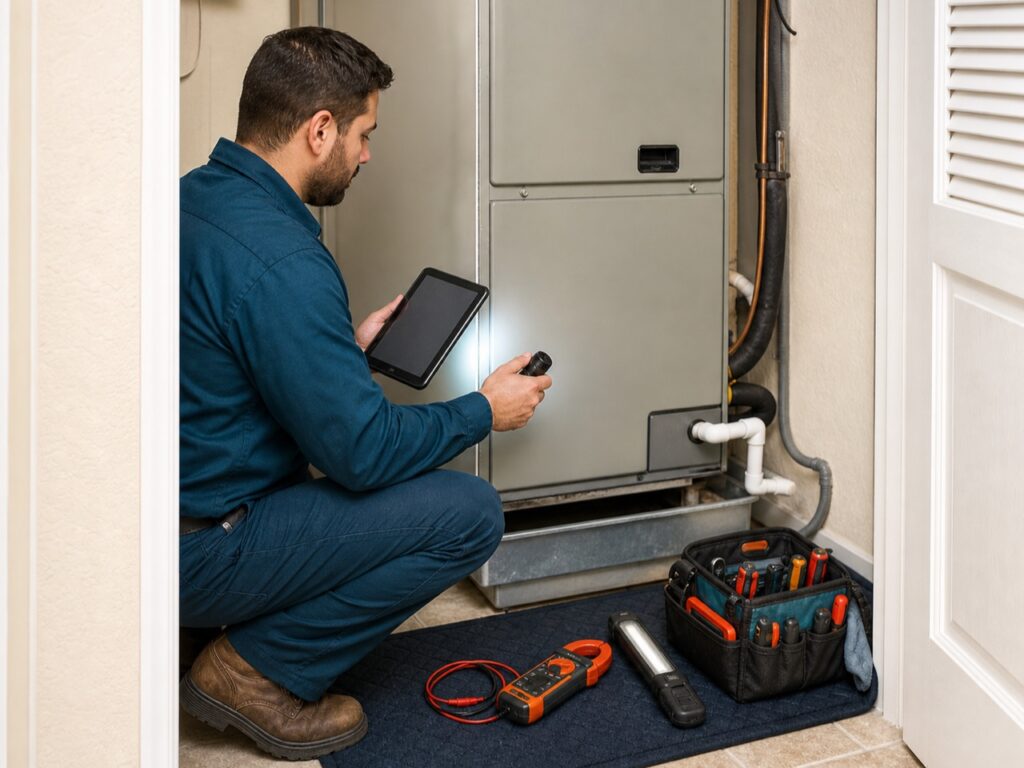
Ice on the refrigerant line or indoor coil means heat is not moving through the system correctly. Low airflow from a blocked filter, blower fault, dirty coil, closed or restricted ducts, or poor return conditions can allow coil temperature to fall too far. A refrigerant-side problem can produce the same visible symptom.…
Air Conditioning Repair
What to check before an AC repair
When the repair and replacement conversations separate
Many no-cool calls end with a direct component or control repair. Replacement planning may make sense when the failed part is tied to broader compressor, coil, heat-exchanger, electrical, refrigerant, or airflow condition; when repairs have become repetitive; or when the system no longer serves the house well even when operating. Temperra does not turn an isolated repair into a capacity recommendation from the old nameplate. If replacement is considered, the home load, return and supply system, equipment pairing, electrical scope, controls, and comfort complaints are reviewed independently. That gives the homeowner a repair option when practical and a properly scoped replacement path when the larger system warrants it.
Prepare the equipment and symptom details
Keep the thermostat, indoor equipment, outdoor unit, electrical panel, attic hatch, and filter location accessible when it is safe to do so. Note whether the system failed suddenly or became less effective, whether the indoor blower and outdoor fan run, and whether the issue affects every room. Save any thermostat fault code and a short recording of intermittent noise. If there is smoke, a burning odor, severe grinding, repeated breaker activity, or water near electrical components, leave the system off. A prior invoice or equipment model number can help establish repair history, but the current diagnosis still has to be based on the present operating condition.
Air Conditioning Repair: common questions
Possible causes include an outdoor unit that is not operating, a compressor or control fault, low airflow, a frozen evaporator, or a refrigerant-side problem. Check the thermostat setting and filter safely, then request diagnosis rather than repeatedly cycling the system.
Yes, turn cooling off. The blower may be used by itself only if it runs normally and water can drain safely. Do not chip the ice or restart the compressor until the coil has thawed and the airflow or refrigerant cause can be tested.
Not necessarily. A breaker can trip because of a motor, compressor, wiring, connection, or equipment fault. Do not reset it repeatedly. Leave the equipment off and have the electrical and mechanical cause diagnosed.
A sealed system should not consume refrigerant during normal operation. If charge is low, the service should address why, evaluate the system condition, and discuss practical repair options rather than treating refrigerant as routine fuel.