

Heat pump service for year-round desert comfort
Heat Pump Service without the guesswork
Heat Pump Service
One refrigerant system, two operating modes
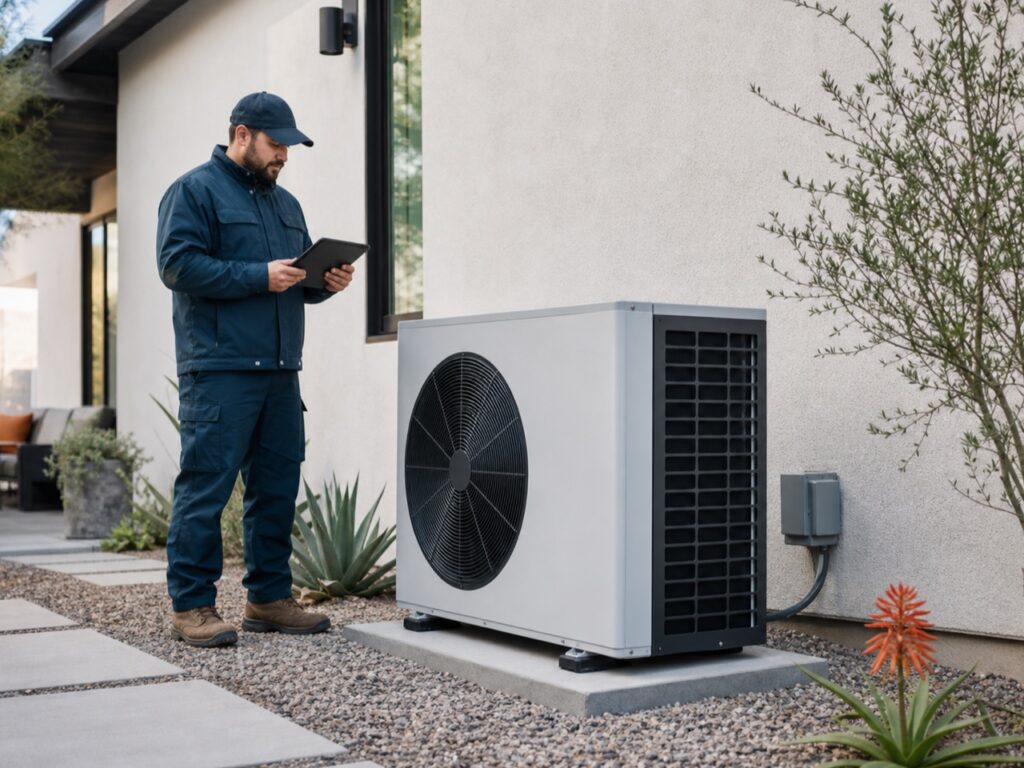
A heat pump moves heat outdoors in cooling mode and reverses the refrigerant cycle to deliver heat indoors. That adds components and control decisions that a cooling-only system does not use the same way. A reversing valve, outdoor thermostat or sensor, defrost board, temperature sensors, auxiliary…
WHAT TO KNOW
Heat-pump symptoms worth reporting
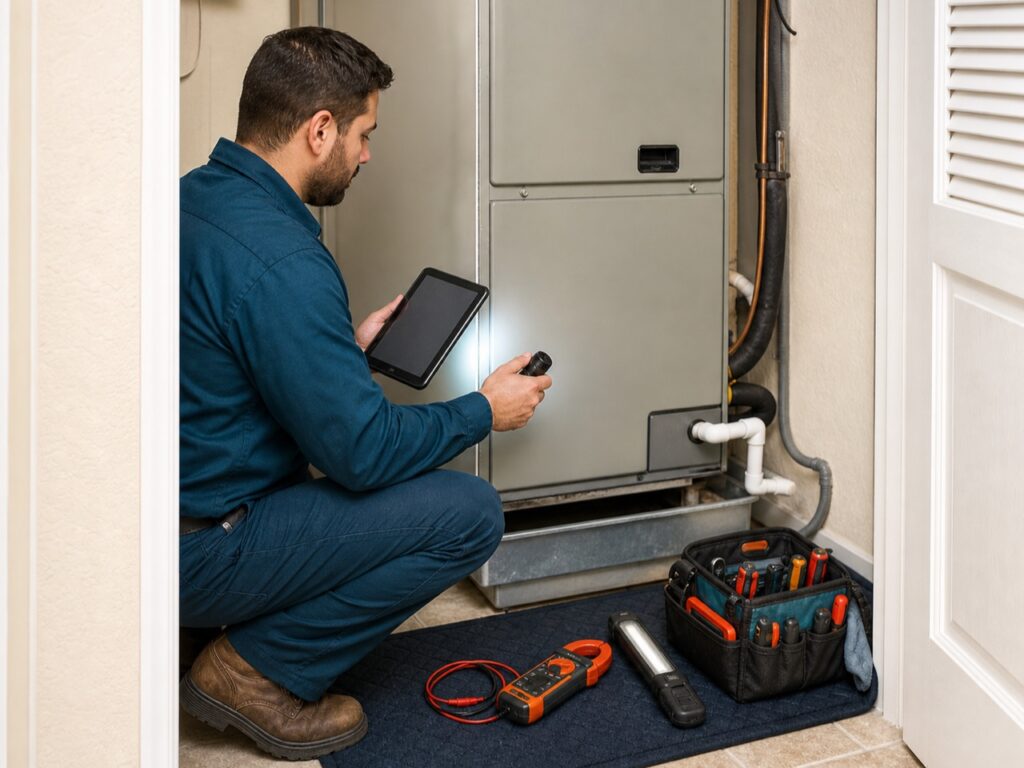
Tell the technician whether the problem occurs in heating, cooling, or both. In heating mode, note whether the outdoor unit runs, whether the thermostat shows auxiliary or emergency heat, whether supply air becomes warmer after the system has operated, and whether the unit repeatedly enters and leaves defrost. In cooling mode, report…
WHAT HAPPENS NEXT
Defrost and auxiliary heat have specific jobs
Outdoor-coil frost can occur during heating operation. A functioning defrost cycle temporarily changes operation to clear the coil, and auxiliary heat may temper the indoor air during that cycle. Steam outside and a brief change in sound can be normal. A coil that becomes packed with ice, a unit that defrosts repeatedly,…
Heat Pump Service
What to know before heat-pump service
Repair findings before replacement options
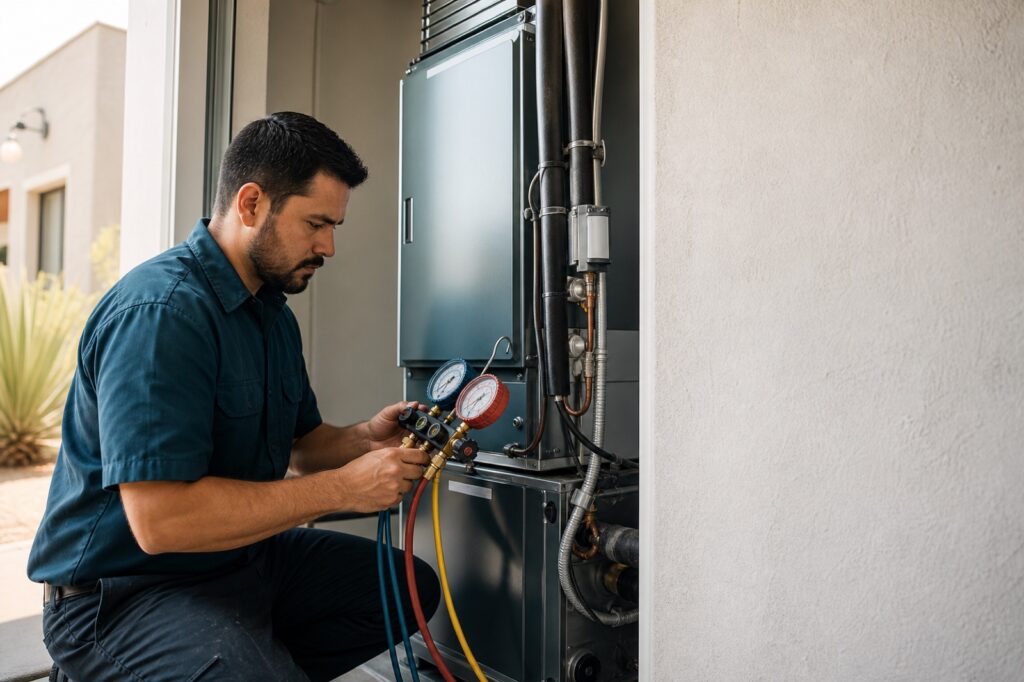
Heat-pump repair can involve capacitors, contactors, motors, sensors, thermostat configuration, defrost controls, reversing-valve control, auxiliary-heat components, condensate safeties, or the refrigerant circuit. The recommendation should identify the failed part and the condition of the rest of the system. When replacement becomes practical, Temperra reviews the home's load, duct and return capacity, electrical service, backup-heat arrangement, thermostat and zoning needs, sound priorities, and the amount of capacity control that fits the comfort problem. A like-for-like capacity swap is not a substitute for that review, especially when the prior system had long runtime, uneven rooms, noise, or poor airflow.
Maintain the components used in both seasons
Heat-pump maintenance needs to account for cooling and heating operation. The visit can include filter and blower condition, visible coil condition, electrical components, temperature performance, refrigerant indicators, condensate drainage, thermostat staging, reversing operation, defrost sensors and controls, auxiliary heat, and outdoor-unit clearance. The technician should record findings rather than assume a clean coil proves the system is ready for both modes. Homeowners can keep the filter on an appropriate schedule, keep the outdoor unit free of stored items and heavy debris, and report new sounds, frequent auxiliary-heat use, icing, or mode problems before they become recurring failures.
Heat Pump Service: common questions
A heat pump often delivers air at a lower temperature than a gas furnace while running for longer periods. The important question is whether indoor temperature rises as expected and whether the system and auxiliary heat are staging correctly.
It can be. During defrost, moisture on the outdoor coil may produce visible steam and a temporary sound change. Heavy ice that does not clear, repeated defrosting, or loss of heat should be evaluated.
Emergency heat generally bypasses normal heat-pump operation and uses the backup heat source. Use it according to the equipment and thermostat instructions when the heat pump cannot operate, then arrange service so the primary fault can be diagnosed.
Yes. Heat-pump thermostats must be wired and configured for the reversing valve, stages, and auxiliary heat used by the system. Incorrect setup can produce wrong-mode operation, poor staging, or unnecessary auxiliary heat.