
HVAC replacement planned around your home's needs
HVAC Replacement without the guesswork
HVAC System Replacement
The replacement assessment starts with the house
The capacity on the old unit tells you what was installed, not what the house needs now. Additions, window changes, insulation, shade, air leakage, duct alterations, and room use can all affect load. Temperra's replacement recommendations include a documented load and airflow review. The assessment records…
WHAT TO KNOW
Compare capacity control, sound, and system fit
Equipment options may differ in compressor staging, blower control, heat-pump configuration, sound, filtration compatibility, thermostat requirements, and how closely output can follow the home's changing load. A basic single-stage system may fit one project, while staged or variable-capacity equipment may better address another home's long runtime, humidity behavior, zoning, sound goals, or…
WHAT HAPPENS NEXT
Plan the ducts, electrical work, drainage, and access
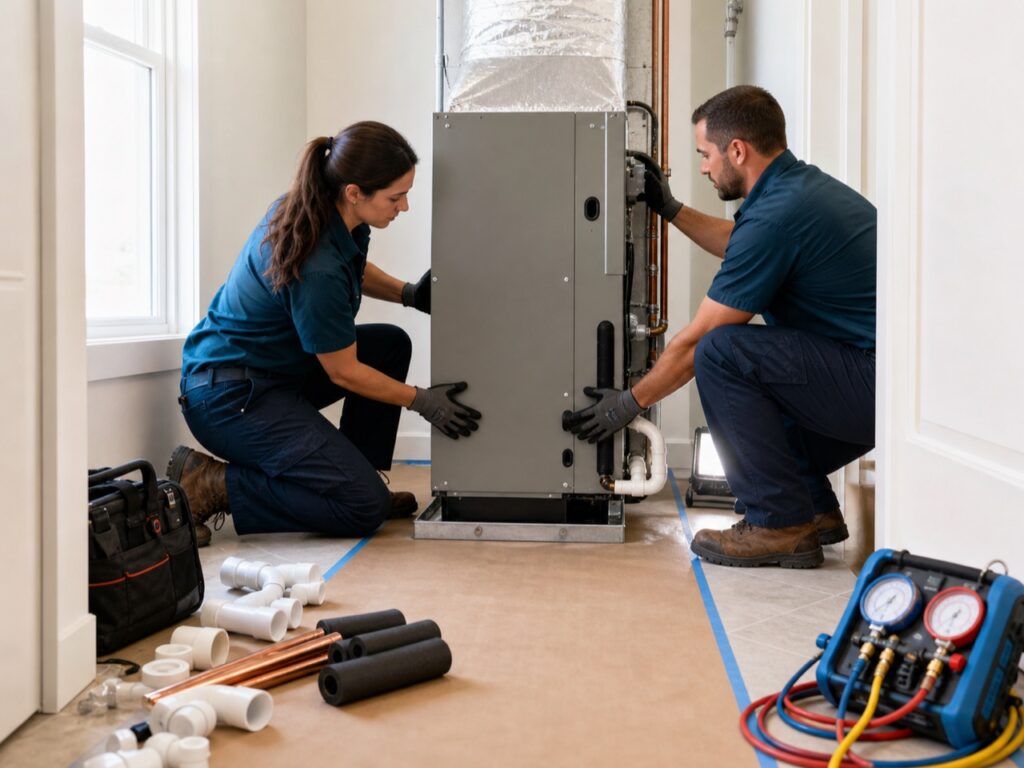
The equipment boxes are only part of an HVAC replacement. The final scope may include a return transition, supply plenum work, equipment stand or pad, roof curb or access planning, line-set evaluation, condensate drain and overflow protection, disconnect and circuit work, thermostat wiring, filter cabinet, combustion venting for a furnace, or removal…

HVAC System Replacement
Before you approve an HVAC replacement
Startup proves how the installed system operates
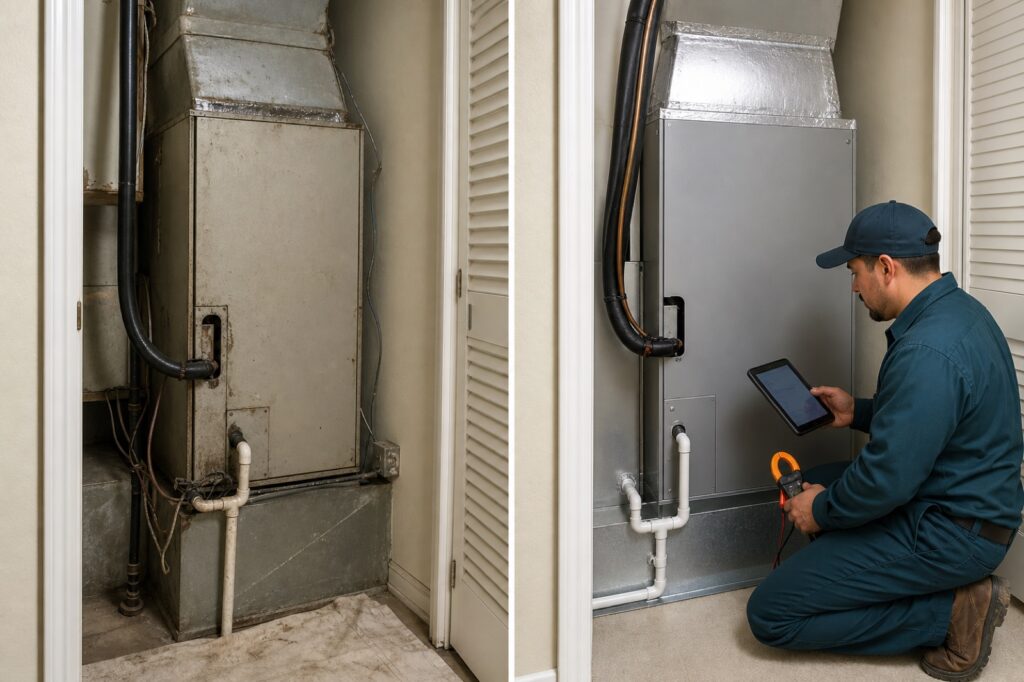
A system can be new and still be poorly set up. Commissioning checks that the installed equipment, controls, airflow, drainage, and electrical operation match the approved scope and manufacturer procedures. Depending on the system, startup documentation may include blower configuration, static-pressure or airflow observations, temperature performance, refrigerant commissioning, voltage and current readings, thermostat staging, defrost or auxiliary-heat operation, condensate flow, safety controls, and communication with zoning or connected controls. The installer should also confirm filter access, equipment clearances, panel installation, drain protection, and homeowner operation. Temperra carries the replacement notes from assessment through startup so open items can be resolved before the project is closed.
Compare the work, not just the model number
Two estimates can list similar equipment and include very different projects. Compare the sizing basis, matched-system components, compressor and blower control, thermostat, filtration, duct and return changes, electrical work, drain work, equipment access, removal, permits when applicable, startup procedures, warranty paperwork, cleanup, and exclusions. Ask who is responsible for correcting a condition discovered after removal and whether proposed duct work is included or merely recommended. An estimate checklist makes those differences visible before a decision. Temperra's resource library includes a side-by-side format for the equipment and installation details that are easy to miss in a short proposal.
HVAC System Replacement: common questions
The old capacity reflects a prior selection, not necessarily the current load or duct system. Home changes, prior sizing, return restrictions, and room comfort can make a documented load and airflow review more useful than matching the nameplate.
Matched components are important for capacity, controls, refrigerant application, efficiency, and manufacturer requirements. The assessment should identify the complete matched system and explain any component proposed for reuse.
Commissioning verifies installed operation. It may cover airflow setup, temperature performance, refrigerant commissioning, electrical readings, thermostat staging, heating or defrost operation, drainage, safety controls, filter access, and documentation required for that equipment.
Compare sizing, matched equipment, controls, ducts, return air, filtration, electrical and drain work, access, removal, permits when applicable, startup, warranty paperwork, cleanup, and exclusions. The installation scope can matter as much as the equipment label.