

Ductless comfort where the central system falls short
Ductless Mini-Splits without the guesswork
Ductless Mini Split Systems
Where a ductless system makes practical sense
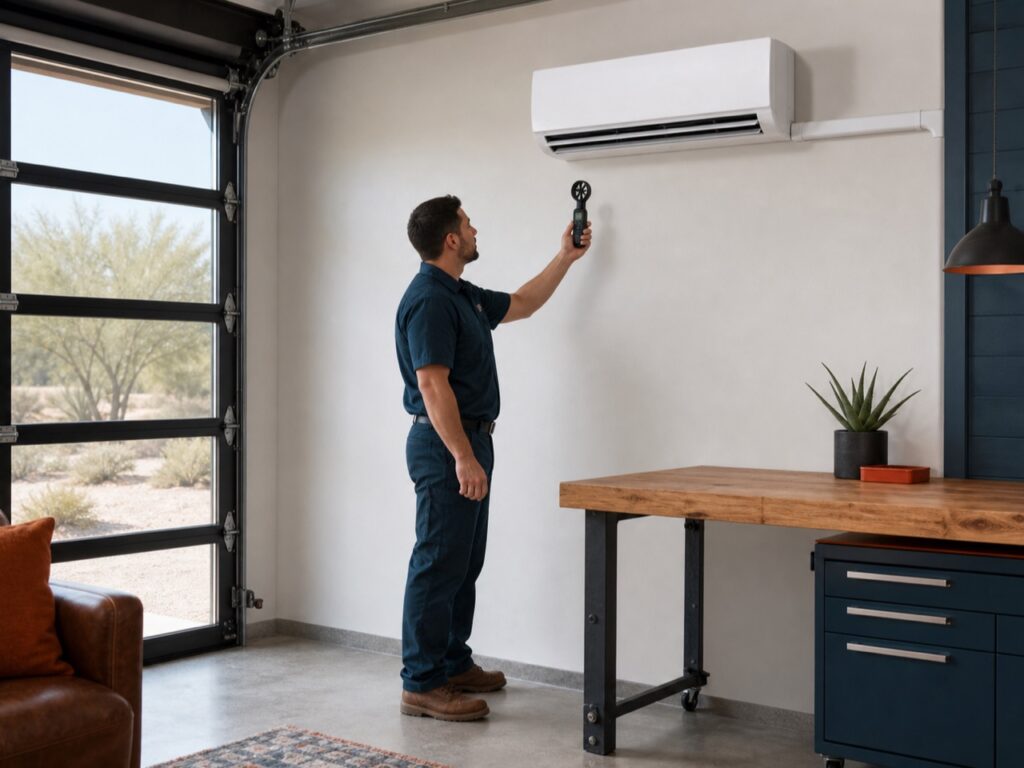
Ductless equipment can serve a room or group of rooms that should not depend on the central duct system. Common applications include a garage workshop, casita, addition, enclosed patio converted to living space, home office, equipment room, or an existing bedroom that cannot be balanced adequately…
WHAT TO KNOW
Size the zone and place the indoor unit for the room
Square footage alone does not describe a ductless load. Glass area and orientation, insulation, ceiling height, exterior walls, roof exposure, air leakage, occupancy, equipment, and how the room will be used all matter. An oversized indoor unit may satisfy the thermostat quickly while producing poor distribution or control; an undersized unit may…
WHAT HAPPENS NEXT
Plan the line set, condensate, power, and exterior finish
The indoor and outdoor units are connected by refrigerant piping, control wiring, and a condensate path. The route must protect bend radius, insulation, weather sealing, drainage, appearance, and future service access. Gravity drainage is preferred where the layout allows it; a condensate pump adds maintenance and should be used because the route…

Ductless Mini Split Systems
Plan the right ductless system
Single-zone and multi-zone systems solve different layouts
A single-zone system pairs one indoor unit with one outdoor unit and gives that room independent operation. A multi-zone system connects several indoor units to one outdoor unit, which can reduce the number of outdoor units but introduces shared capacity, piping, control, and turndown considerations. Not every group of rooms is a good multi-zone application. Rooms with very different schedules or loads may compete for available capacity, and an outdoor unit serving a small active zone must still operate within its control range. Temperra compares the actual zones, simultaneous loads, line routes, equipment locations, and service access before recommending one multi-zone system or separate single-zone equipment.
Keep filters, coils, drains, and blower wheels clean
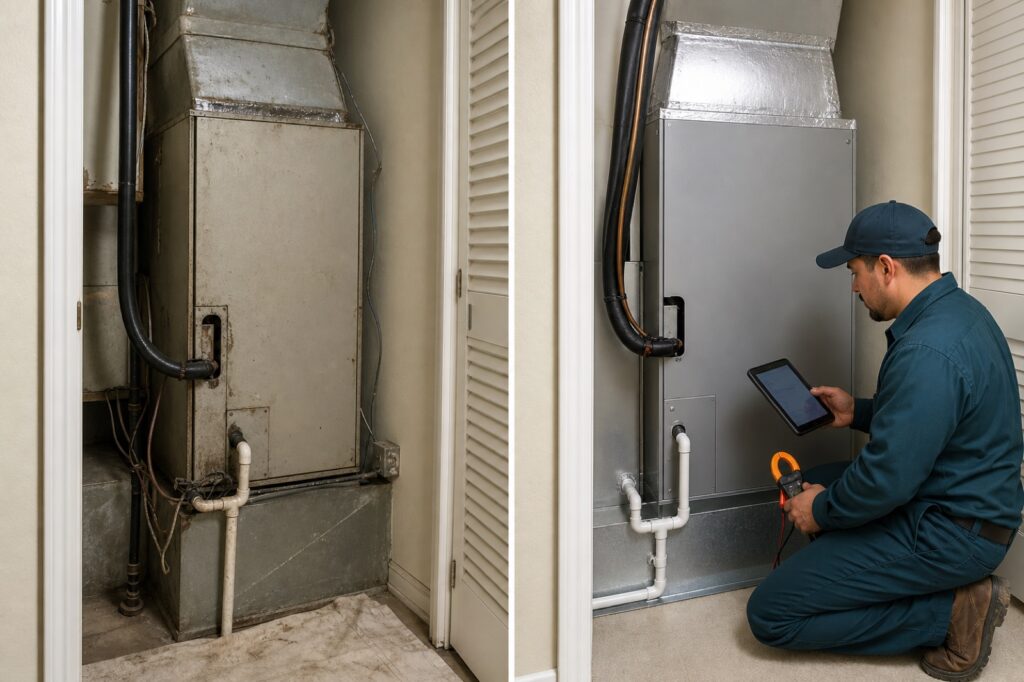
Ductless indoor units move room air through compact filters and a closely spaced coil. Dust that passes the filter can collect on the coil, blower wheel, drain pan, and outlet vanes, reducing airflow and creating drainage or odor problems. Washable filters still need regular inspection and correct reinstallation. The outdoor coil needs airflow and the line-set insulation and exterior penetrations should remain intact. A maintenance visit may include operational readings, electrical checks, coil and blower inspection, drain testing, refrigerant indicators, and confirmation that each zone responds to its controller. Report water dripping from the indoor unit, new odor, rattling, weak airflow, icing, or a zone that no longer heats or cools normally.
Ductless Mini Split Systems: common questions
It can when the space is suitable for conditioning and the unit is sized for the actual load. Insulation, glass, roof exposure, air leakage, room use, electrical supply, condensate, and equipment placement all need review.
Yes. Cooling operation removes moisture from the air, and that condensate must drain safely. The installation should define the gravity route or necessary pump, termination point, cleanout access, and protection against leaks.
No. Multi-zone equipment shares outdoor capacity and has piping and operating-range considerations. Separate single-zone systems may fit rooms with very different loads, schedules, or routes. The layout should drive the choice.
Inspection frequency depends on runtime, dust, pets, room use, and the manufacturer's instructions. Check them regularly, clean them as directed, and arrange deeper service when the coil, wheel, drain, or airflow needs attention.