
Straight answers before the service visit
Straight answers for your HVAC system
HVAC Guides & Checklists
Repair or Replace: A Homeowner's HVAC Decision Guide
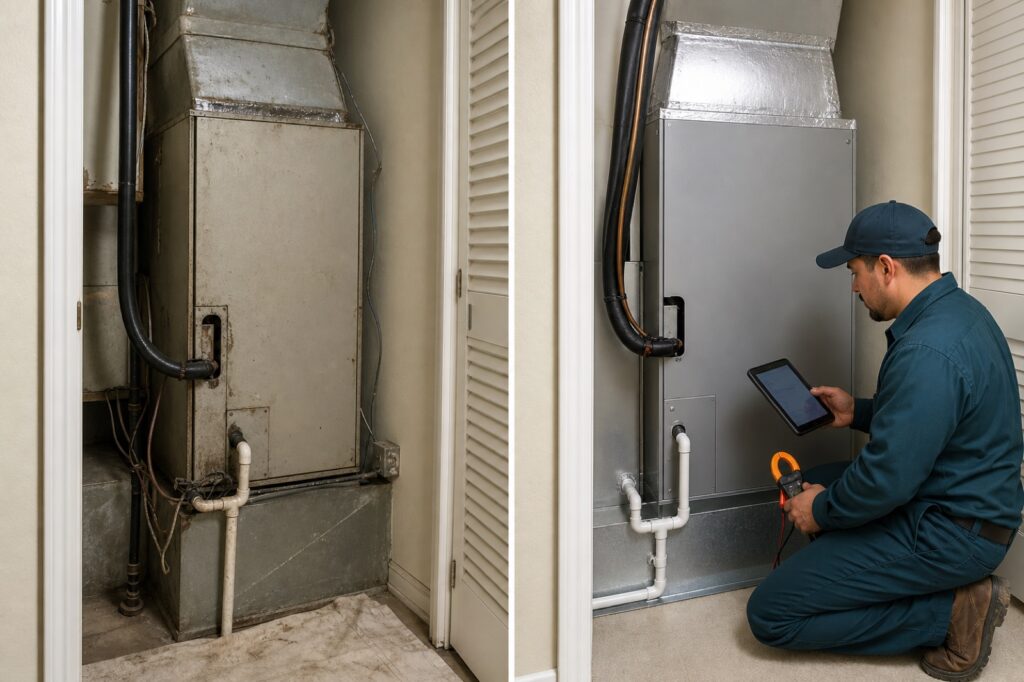
A repair-versus-replacement decision should not be reduced to equipment age or one repair price. The useful questions are broader: What failed? Is the failure isolated or part of a pattern? What condition are the compressor, motors, coils, controls, heat exchanger, and refrigerant circuit in? Does the…
WHAT TO KNOW
The East Valley Filter Guide
The filter has two jobs: capture particles and allow the blower to move the airflow the system was designed to deliver. A higher MERV label does not guarantee a better result if the filter is undersized, installed in a leaky rack, loaded with dust, or too restrictive for the return system. The…
WHAT HAPPENS NEXT
What a complete HVAC estimate should include
A useful replacement estimate defines both the equipment and the work required to make it operate in the house. The checklist covers the load and sizing method, indoor and outdoor equipment, capacity-control type, thermostat and sensors, filtration, return and supply modifications, line-set plan, condensate drainage, equipment pad or roof scope, electrical work,…
HVAC Guides & Checklists
Use these details before you schedule
Prepare for a diagnostic visit safely
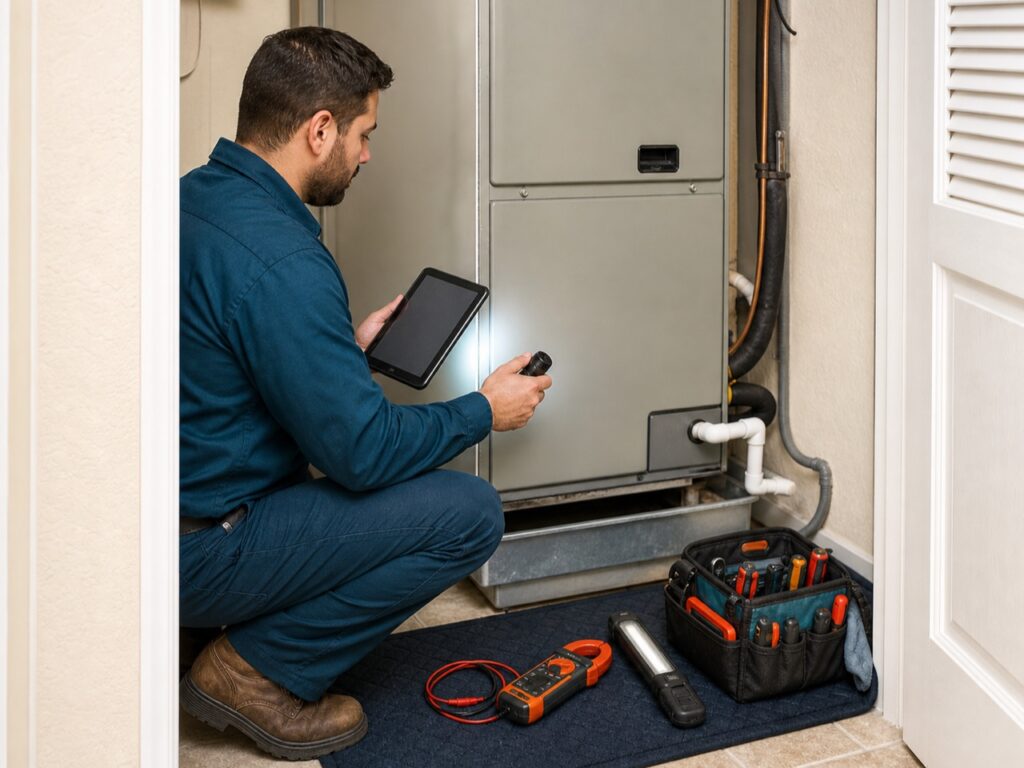
Before the appointment, note which thermostat and system are involved, which mode is selected, and whether the equipment starts, stops, or runs continuously. If safe, check whether the filter is visibly blocked and whether supply registers are open. Keep equipment access, attic hatches, closets, roof access points, electrical panels, and the thermostat clear. Photos or short video of an intermittent noise can help, as can prior invoices and model information. Do not remove service panels, touch wiring, reset a breaker repeatedly, chip ice from a coil, or run equipment that produces smoke, a burning odor, or severe grinding. If a gas odor is present, leave the area and follow the gas utility's emergency instructions.
Write down the symptom the way the system behaves
Useful notes are specific and observable. Instead of saying the unit is broken, record whether the thermostat is blank, the indoor blower runs, the outdoor fan runs, the compressor starts, the air is warm, airflow is weak in every room or only one area, water is near the indoor unit, ice is visible, or a breaker trips. For heating, note whether the furnace ignites and shuts down, the heat pump changes modes, auxiliary heat stays on, or the thermostat shows a fault. Include whether the problem is constant or intermittent and whether recent filter, thermostat, electrical, roofing, duct, or remodeling work preceded it. Those details shorten the path to the correct diagnostic sequence without asking you to name the failed part.
HVAC Guides & Checklists
Questions worth asking before the work
Use general guidance with the readings from your system
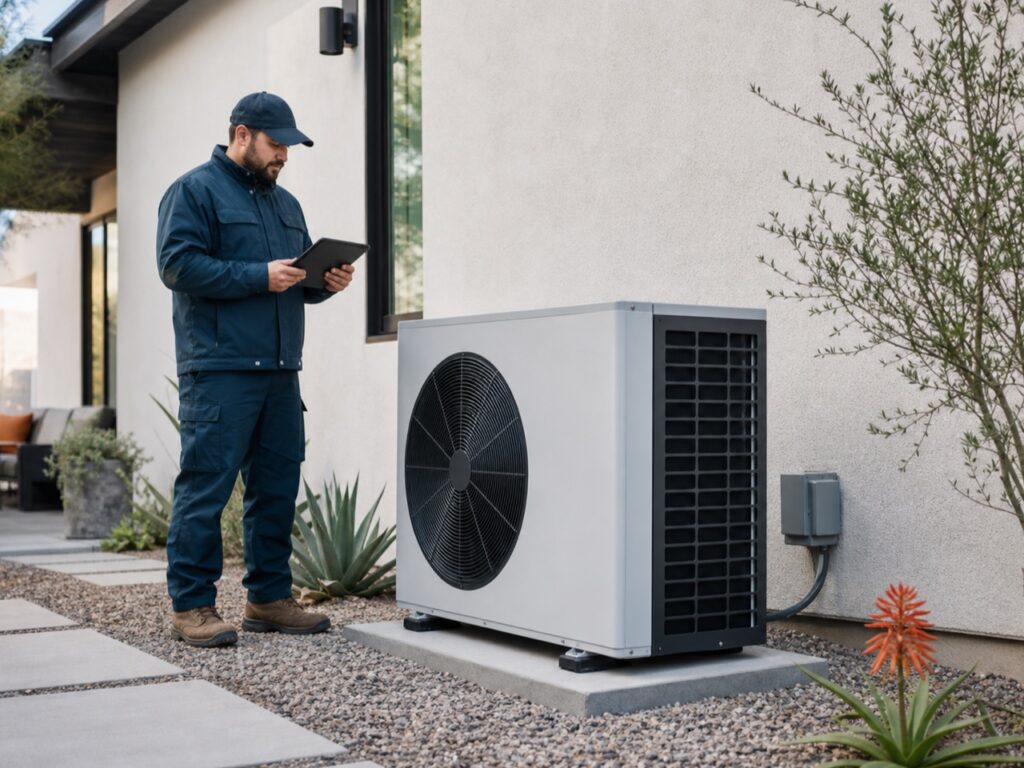
An article can explain components and questions, but it cannot see a burned contactor, test a capacitor, measure static pressure, evaluate refrigerant performance, inspect a heat exchanger, or confirm that a control signal reaches the equipment. Online rules based on age, square footage, or one temperature reading often omit the house and installation conditions that matter most. Use the resource library to prepare questions and organize records. Use an on-site diagnosis for repair decisions, safety concerns, sizing, and any work that requires opening equipment or handling electrical, fuel-gas, or refrigerant components. The purpose of the guides is to make the service conversation more useful, not to turn a homeowner into the technician.
Request the right service visit
Send the equipment type, symptom, service address, and any safe photos or records that can help prepare the technician.
HVAC Guides & Checklists: common questions
It can organize the decision, but the answer depends on a documented diagnosis, system condition, comfort, ductwork, refrigerant considerations, repair history, and ownership plans. Use the worksheet to compare those facts after the equipment has been evaluated.
No. Filtration has to be matched to filter area, return capacity, blower performance, and household needs. A restrictive or poorly fitted filter can reduce airflow. Check the equipment and return system before making a large change in filter type.
Collect the equipment scope, sizing method, duct corrections, electrical and drain work, controls, filtration, access or roof work, permit responsibility when applicable, removal, startup, warranty paperwork, and exclusions. Compare the installation work as carefully as the model numbers.
Yes. Prior diagnoses, replaced parts, refrigerant work, electrical readings, recurring drain issues, and comfort notes can help identify patterns. They also show a new technician which repairs have already been attempted.
Do not open service panels, test live electrical components, handle refrigerant, alter gas or venting components, defeat safety controls, or repeatedly reset a tripping breaker. Shut the system down when operation appears unsafe and arrange qualified service.