

Heating and air conditioning service for Mesa homes
Mesa without the guesswork
Mesa HVAC Service
Cooling equipment carries a sustained summer load in Mesa
NOAA's 1991–2020 climate normals for its East Mesa station put the local cooling demand in useful terms. The normal daily maximum for July is 105.9°F, and July averages 29.1 days with a maximum of at least 100°F. Those are climate normals for that station, not a…
WHAT TO KNOW
AC repair includes the airflow side of the system
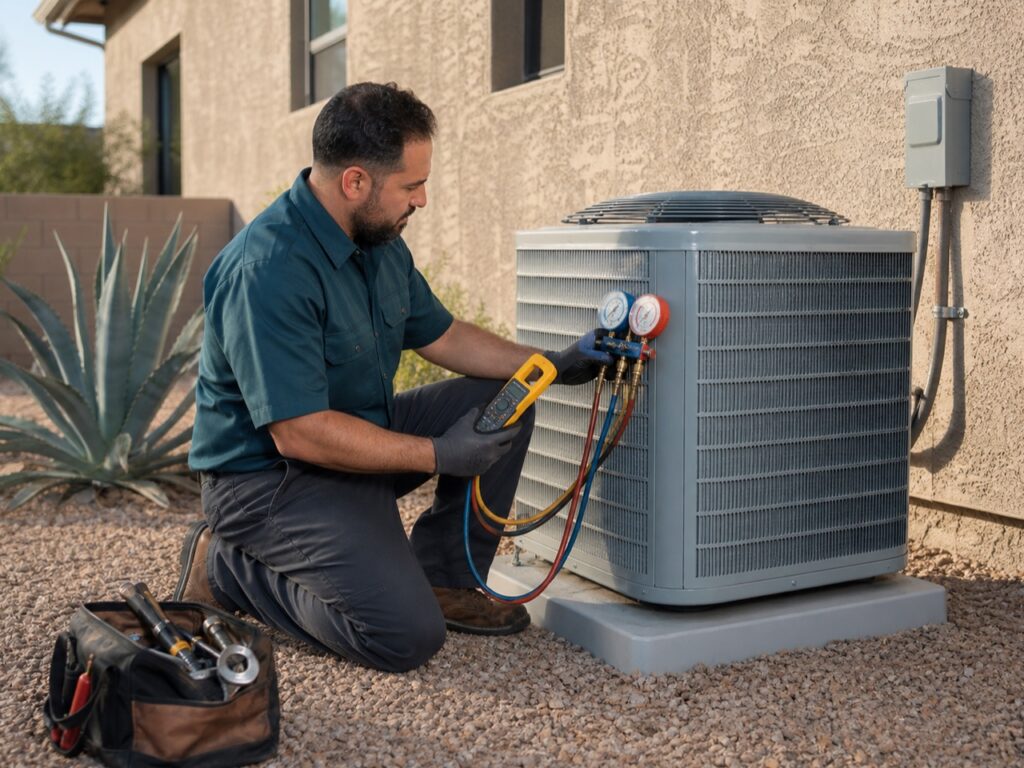
A condenser repair can restore operation without correcting a restricted return, loaded filter, dirty indoor coil, weak blower, damaged duct, or room distribution problem. Temperra follows the no-cool symptom through the thermostat, electrical and control circuit, indoor blower, filter and coil, outdoor components, condensate safeties, temperature performance, and refrigerant-side indicators that apply…
WHAT HAPPENS NEXT
Replacement scope can change the Mesa permit question
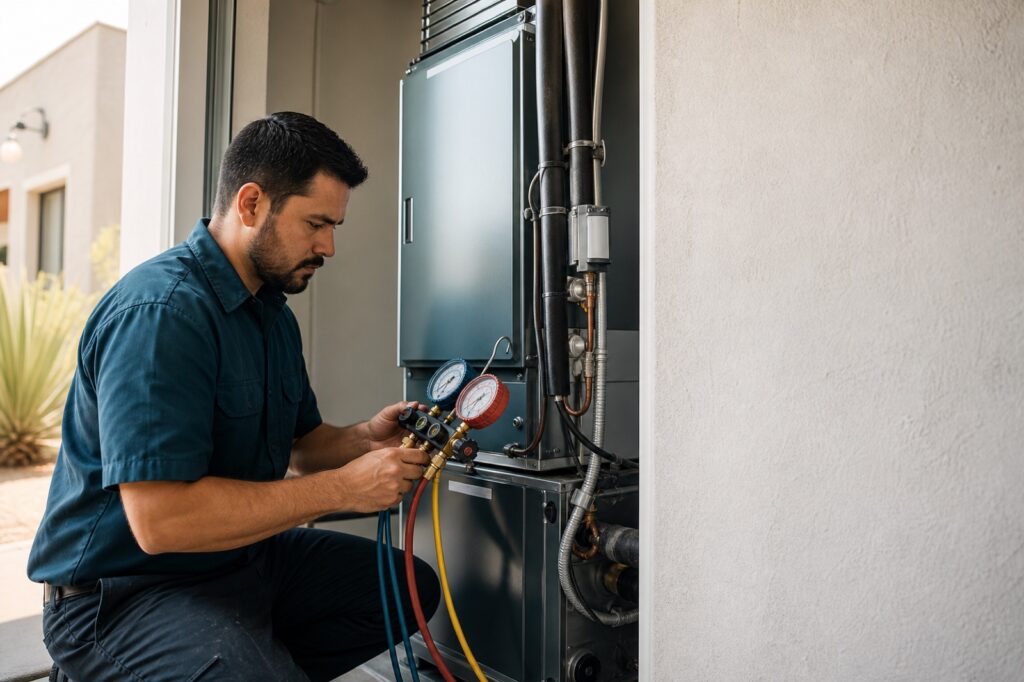
Mesa's residential construction FAQ draws a specific distinction for air-conditioning replacement: it says a new unit using the same or less electricity than the old unit does not need a permit, while changing the electrical connections requires a construction permit. That municipal guidance means permit handling should be based on the actual…
Mesa HVAC Service
What Mesa homeowners should know
Ductless options for garages, additions, and difficult rooms
A garage workshop, casita, addition, or converted room may have a load and schedule that do not fit the central system. Extending a small duct into the space can reduce airflow elsewhere and may not provide enough return path or capacity. A ductless system gives the room independent control, but the zone still needs a load review, a suitable building enclosure, indoor-unit placement, a line-set route, condensate disposal, electrical supply, and an outdoor-unit location with service access. Temperra compares a mini-split with central-system and duct options based on how the space will be used. Permit and code questions for conditioned additions or electrical changes are confirmed from the current project scope rather than assumed from the equipment type.
Request service from across Mesa
Temperra routes Mesa requests by address, system type, symptom, and project scope. For a repair, include whether the thermostat is operating, whether the indoor and outdoor equipment run, whether air reaches the registers, and any ice, water, odor, noise, or breaker activity. For replacement or ductless planning, add the rooms with comfort problems, equipment location, known duct conditions, recent remodeling, and safe access notes. Photos can help when they are taken without opening panels or entering a dangerous roof or attic area. The address is used to confirm coverage and to prepare the diagnostic, maintenance, indoor-air, or installation assessment that fits the request.
Mesa HVAC Service: common questions
No. Runtime depends on outdoor conditions, indoor setpoint, load, equipment capacity, and capacity control. Service is warranted when the system cannot maintain temperature, airflow is weak, operation changes, ice or water appears, or electrical or mechanical symptoms develop.
Mesa's current residential FAQ says a replacement using the same or less electricity does not need a permit, while changed electrical connections require one. The complete project scope should be checked against current city guidance before work.
It can when the enclosure, load, electrical supply, condensate route, line-set path, and equipment locations are suitable. A garage or converted space should be evaluated as its own zone rather than sized by square footage alone.
Include the address, thermostat status, indoor and outdoor equipment operation, airflow, affected rooms, visible ice or water, new noise or odor, breaker activity, equipment location, and safe access information.