

A Mesa HVAC company founded by a controls technician
Built in Mesa. Ready for desert heat.
Meet the Temperra HVAC Team
How Temperra started
Elena Marquez founded Temperra Heating & Air in Mesa in 2008 after working in HVAC controls and residential service. She saw too many comfort complaints reduced to an equipment swap without checking the duct system, return path, controls, or the load the house actually placed on…

WHAT TO KNOW
Diagnosis before the quote
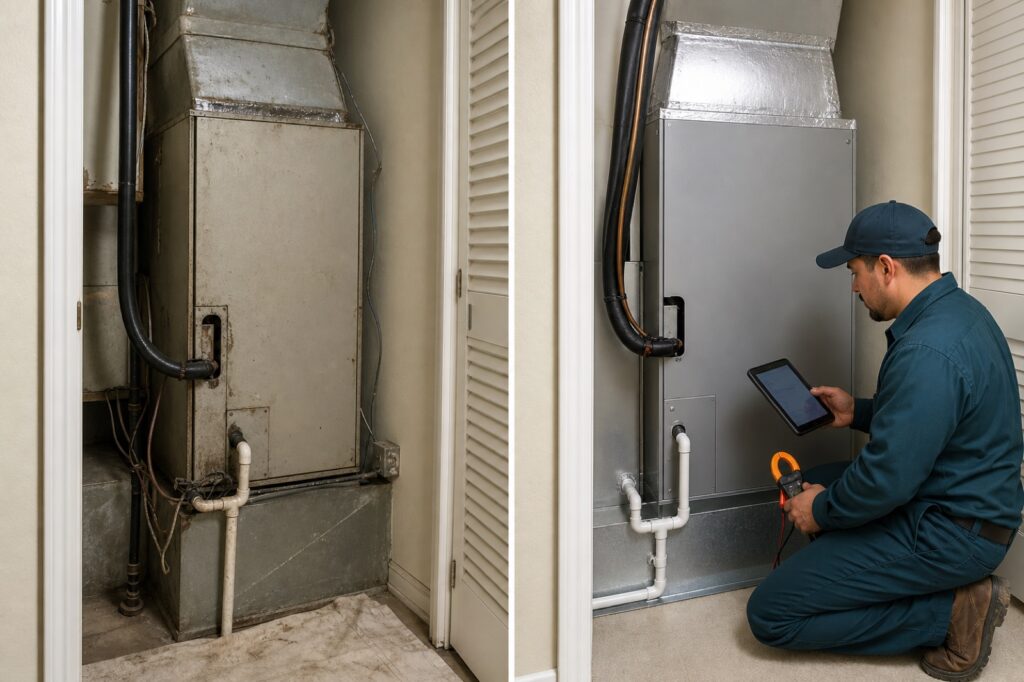
Heating and cooling equipment is a connected system. A failed run capacitor may stop a compressor or fan, but an overheated motor, dirty coil, low voltage, or repeated hard starting may also matter. A frozen evaporator can be related to airflow, controls, coil condition, or a refrigerant-side fault. A hot upstairs bedroom…
WHAT HAPPENS NEXT
Service, installation, and coordination leadership
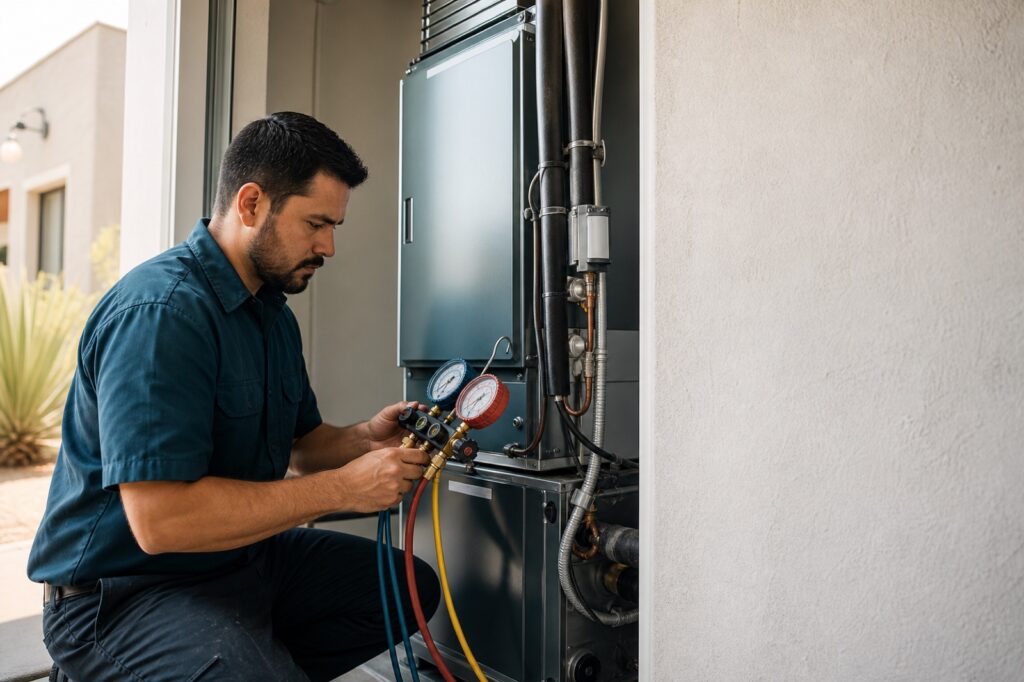
Elena Marquez serves as founder and general manager, overseeing technical standards, installation commissioning, and customer resolution. Service Manager Marcus Lee trains the diagnostic team on airflow, electrical, refrigerant, and heat-pump troubleshooting, then uses callbacks as training material with the technician who completed the original work. Installation Coordinator Nina Patel handles equipment arrival,…
Meet the Temperra HVAC Team
What Temperra customers can expect
Training built around readings and records
Technical confidence comes from a repeatable diagnostic method, not from replacing parts until the system runs. Service training covers the sequence of operation, safe electrical testing, airflow and static-pressure basics, temperature performance, refrigerant circuit indicators, condensate systems, combustion and venting checks, thermostat logic, heat-pump defrost, and the conditions that require a technician to stop equipment. Written records matter because HVAC problems develop over time. A prior capacitor reading, temperature split, drain observation, filter condition, blower setting, or comfort note can give the next technician useful context. Temperra's operating values are direct: diagnose before quoting, show the readings, protect the home, commission new equipment, and leave useful records behind.
One installation scope from assessment through startup
A new system should not be selected only by matching the old capacity. Temperra's replacement workflow includes a documented load and airflow review, then carries the approved scope into installation. The crew needs to know which return or supply corrections are included, how the condensate will drain, whether electrical work is required, where controls and sensors belong, how equipment access will be protected, and which rooms prompted the project. Startup is the point where installed performance is checked against the design: airflow settings, temperature operation, controls, drainage, electrical readings, and manufacturer startup procedures are documented before the project is closed. The homeowner receives the operating information and records needed for future service.
Meet the Temperra HVAC Team: common questions
Elena Marquez founded Temperra in Mesa in 2008. Her background in HVAC controls and residential service shaped the company's emphasis on airflow, system operation, and measured diagnostics before equipment recommendations.
Many HVAC symptoms have several possible causes. Electrical readings, temperature performance, airflow observations, control signals, and refrigerant-side indicators help distinguish a failed component from a larger system condition and give the homeowner a record of the diagnosis.
The installation scope is coordinated between the assessment, installation, and office teams. Nina Patel manages scheduling, equipment arrival, homeowner preparation, applicable permit coordination, and final paperwork, while technical leadership oversees commissioning standards.
No. The tests follow the equipment and symptom. A no-cool split system, an intermittent heat pump, a furnace ignition problem, and a low-airflow complaint each require a different operating sequence and set of measurements.