
Reliable heat with the safety checks built in
Furnace Service without the guesswork
Furnace Repair and Service
Follow the furnace sequence from the thermostat call
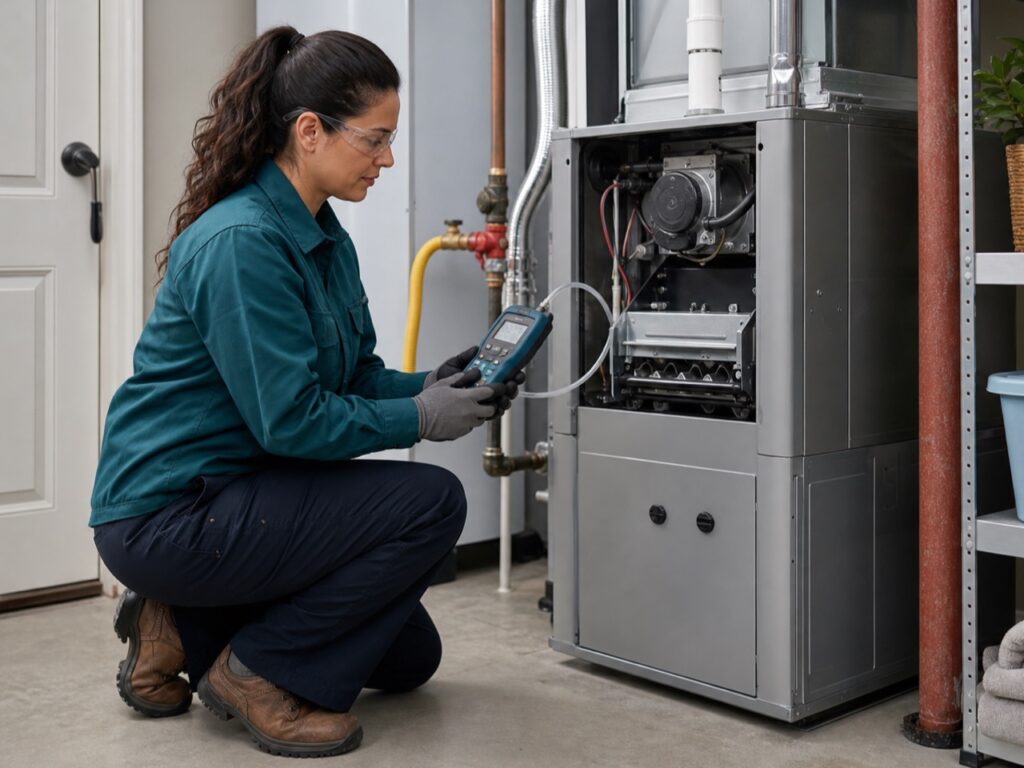
A modern gas furnace follows an ordered startup. The thermostat calls for heat, the inducer establishes draft, the pressure switch confirms the expected condition, the igniter operates, the gas valve opens, the burners light, the flame sensor proves flame, and the blower starts after the control…
WHAT TO KNOW
Common no-heat and short-cycle faults
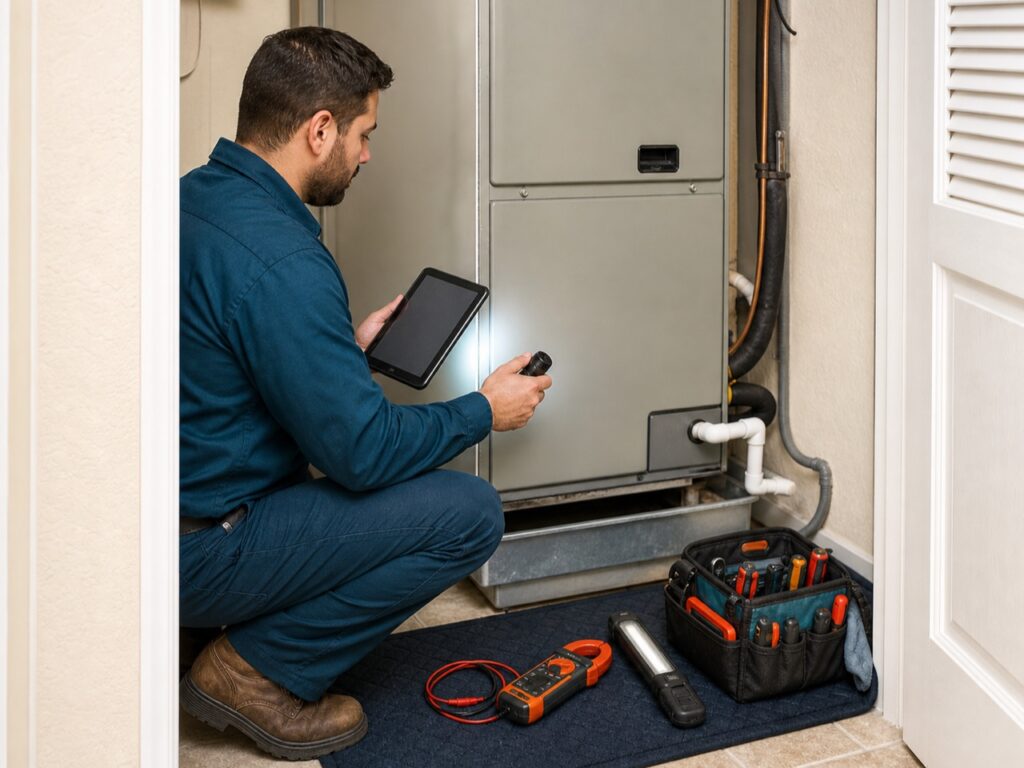
A dirty flame sensor can allow ignition and then shut the burners down. An igniter can fail before flame is established. Pressure-switch faults can relate to the switch, inducer, tubing, drain, intake, exhaust, or venting condition rather than the switch alone. A blocked filter, closed registers, dirty blower, weak motor, or restricted…
WHAT HAPPENS NEXT
Venting, flame, heat-exchanger, and safety checks
Gas heating service includes safety observations that do not apply to every cooling call. The technician checks the venting and combustion-air arrangement appropriate to the equipment, burner and flame condition, ignition, flame proving, limit and rollout controls, blower operation, and visible furnace condition. Heat-exchanger concerns require qualified inspection and should not be…

Furnace Repair and Service
What to expect from furnace service
Repair scope and furnace replacement planning
Many furnace failures can be corrected with an ignition, sensor, motor, control, venting, condensate, or airflow repair. Replacement planning may be appropriate when the heat exchanger, major components, venting requirements, repeated failures, equipment pairing, or broader system condition make repair impractical. A furnace is also the indoor airflow platform for many split air-conditioning systems, so blower capacity, evaporator-coil compatibility, filter arrangement, return air, electrical controls, and the outdoor cooling equipment have to be considered together. Temperra separates the immediate no-heat diagnosis from the replacement assessment and documents how any proposed furnace fits the rest of the heating and cooling system.
Before the heating visit
Note what the thermostat displays and whether the furnace makes any attempt to start. If safe, listen for the inducer, ignition, burner operation, and blower, but do not remove panels or reach into the equipment. Save the fault code shown through a viewing window if the manufacturer provides one. Check that the filter is not visibly blocked and keep the furnace, thermostat, electrical panel, filter, vent termination, and attic or closet access clear. Mention recent thermostat replacement, gas interruption, roofing work, drain problems, or electrical work. Leave the system off after a gas odor, burning electrical odor, repeated limit shutdown, severe noise, smoke, or repeated breaker trip.
Furnace Repair and Service: common questions
Flame-proving trouble is one possible cause, but controls, gas pressure, venting, limits, airflow, and other conditions can also interrupt operation. The shutdown point and fault history guide the diagnostic sequence.
Yes. A severely restricted filter can reduce airflow, raise furnace temperature, and open a high-limit control. The filter should be corrected, but the blower, coil, ducts, and repeated limit history may also need evaluation.
Leave the building and follow the gas utility's emergency instructions from a safe location. Do not operate switches, start equipment, or use a website request as a substitute for emergency reporting.
It can. The furnace blower often moves cooling air through the indoor coil and ducts. Blower capacity, coil match, cabinet dimensions, controls, filter setup, and the rest of the split system should be reviewed together.