Electrical repair that finds faults before replacing parts
Electrical Repair & Troubleshooting planned around the property
Electrical Repair & Troubleshooting
Heat, smoke, sparking, and shock are stop signs
An electrical problem becomes a safety issue when there is smoke, fire, active sparking, a strong burning odor, a hot panel or meter enclosure, exposed damaged conductors, or a shock from equipment. Move people away and call emergency services when there is immediate danger. Do not…
WHAT TO KNOW
Troubleshooting follows the circuit, not the guess
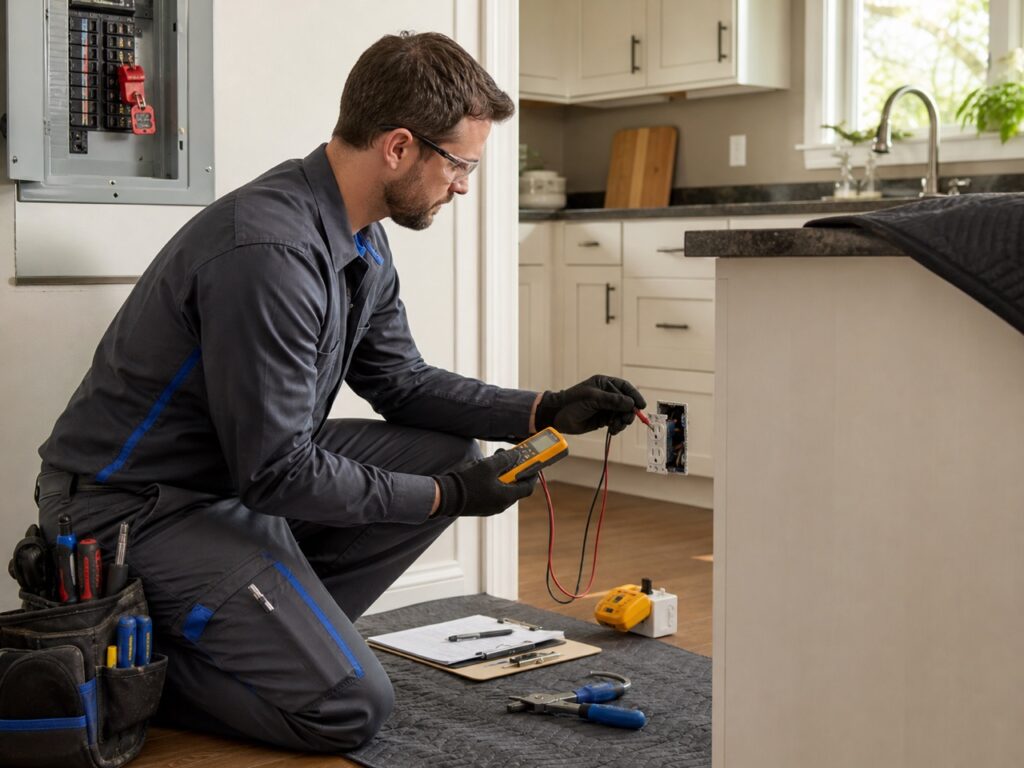
A dead receptacle can come from the device, an upstream connection, a tripped protective device, a damaged conductor, or a problem at the panel. Flickering may be limited to a lamp or dimmer, or it may point to a loose connection elsewhere on the circuit. Arcstead begins with the reported symptom, confirms…
WHAT HAPPENS NEXT
Common repair calls in homes and small businesses
Arcstead troubleshoots dead circuits, failed outlets and switches, lighting faults, repeated breaker or GFCI trips, loose or damaged devices, equipment circuits, exterior power, and partial outages within a property. Commercial calls can also involve lighting zones, controls, signs, receptacles, dedicated equipment circuits, and faults that interrupt one part of an occupied operation.…
Electrical Repair & Troubleshooting
What an electrical diagnostic should establish
A repair recommendation should match the identified fault
Once the fault is identified, the electrician explains the failed component or connection, the condition that contributed to it, and the work required to restore safe operation. A scorched device may require correction of the termination and inspection of the box and conductor, not only a new cover and receptacle. A breaker trip caused by too much connected load calls for a different solution than a damaged conductor or failed appliance. Arcstead separates the immediate repair from optional improvements and from larger corrective work that needs its own proposal. When the condition affects a panel, service, multiple circuits, or concealed wiring, the owner receives a clear explanation of why the scope extends beyond the first visible symptom.
Test the result and leave the circuit identified
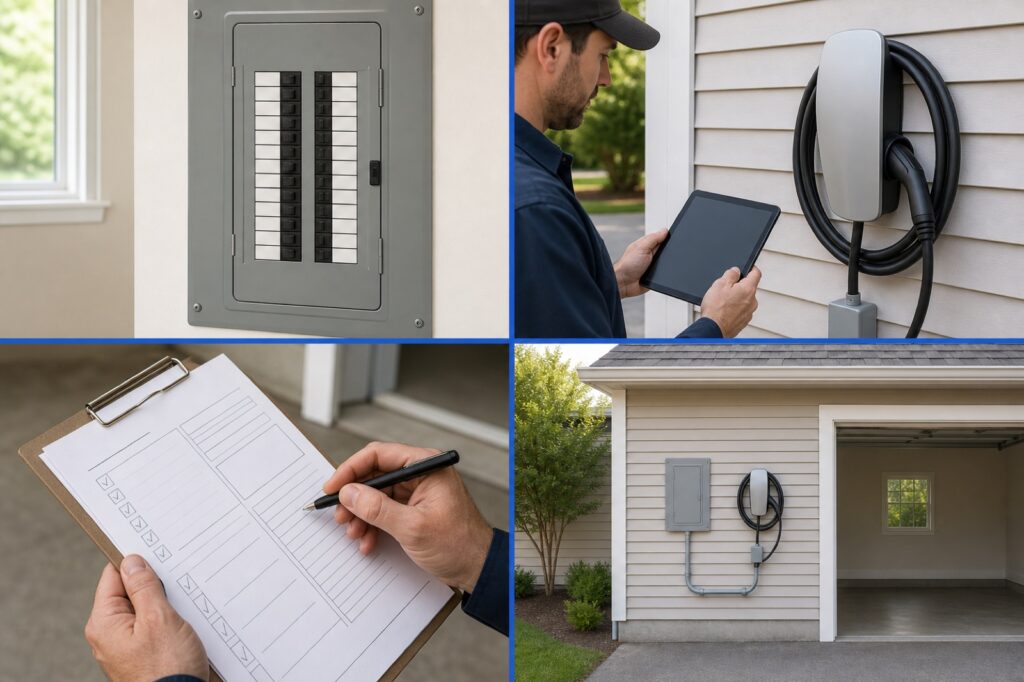
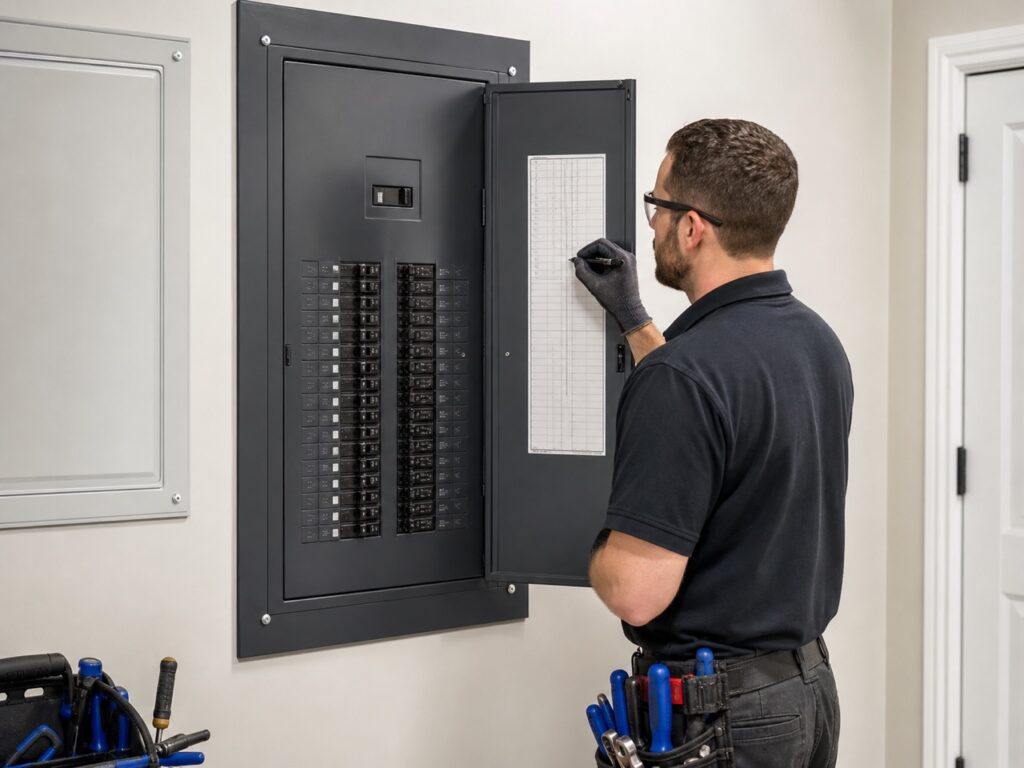
Repair closeout includes testing the corrected condition, confirming the affected device or circuit operates as intended, and recording what was found. If a breaker, panel directory, disconnect, control, or equipment circuit was mislabeled, Arcstead corrects the identification within the completed scope. The electrician also notes a condition that was observed but not included, such as older wiring elsewhere, equipment damage that belongs to another trade, or a load that should be evaluated separately. On completed projects, the owner receives a labeled-circuit review and walkthrough. That record matters on intermittent problems because a future technician can see what was tested and repaired instead of beginning with no history.
Electrical Repair & Troubleshooting: common questions
Do not keep resetting it. Leave the affected circuit off if that can be done without approaching damaged or hot equipment, note what was running, and request troubleshooting. Heat, smoke, sparking, or immediate danger calls for emergency services.
Yes, although intermittent faults may require additional observation. Note the affected devices, time and conditions, breaker behavior, connected loads, and any heat, odor, or sound. The electrician can use that pattern with circuit tracing and test results.
The cause can be a branch-circuit fault, a tripped protective device, a connection problem, panel or service damage, or a utility condition. Do not open electrical equipment to investigate; report which rooms and large appliances are affected.
When the device is the identified fault and the repair is within the authorized scope, it may be corrected during the visit. Damage to conductors, boxes, panels, or connected equipment can require a different or larger repair.