Commercial electrical work organized around the operation
Light Commercial Electrical planned around the property
Light Commercial Electrical
Find the fault without losing the whole business day
A commercial service call begins with the affected operation: which lights, receptacles, equipment, rooms, or tenants lost power, and what must remain available while diagnosis proceeds. Arcstead traces the relevant circuit and reviews protective devices, terminations, controls, connected loads, and equipment condition. The site contact should…

WHAT TO KNOW
Carry the tenant plan into the electrical scope
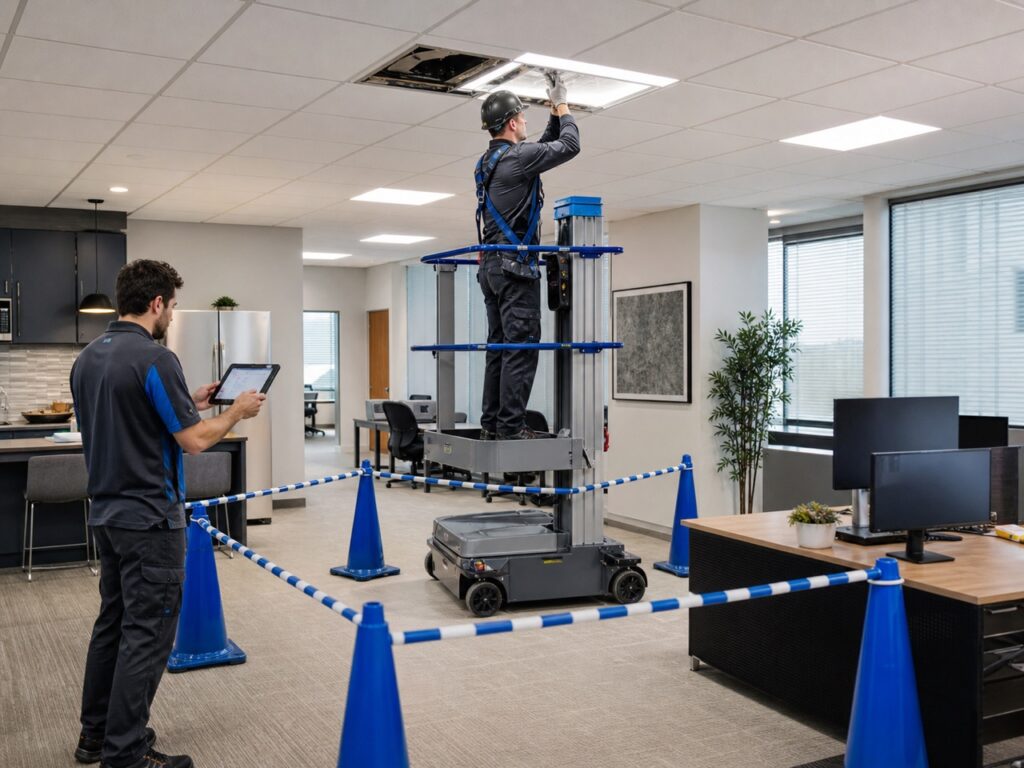
A tenant improvement connects architectural plans, equipment schedules, reflected ceiling plans, life-safety requirements, landlord standards, utility conditions, and the existing electrical system. Arcstead reviews the circuits and panels serving the space, demolition limits, new devices and lighting, equipment connections, controls, pathways, and responsibilities shared with the general contractor and other trades. The…
WHAT HAPPENS NEXT
Lighting and controls for employees, customers, and maintenance
Commercial lighting has to support the work, the customer experience, code-required functions, and the people who will maintain it. Arcstead can inventory existing fixture and control types, identify failed or inconsistent equipment, and plan phased replacement for occupied areas. The design discussion covers light level and distribution, color, glare, switching zones, dimming,…
Light Commercial Electrical
Plan around the business operation
Verify equipment loads before the delivery date
Commercial equipment is often ordered by an owner, tenant, kitchen consultant, mechanical contractor, or vendor before the electrical requirements are compared with the space. Arcstead asks for the exact equipment schedule, nameplate or submittal information, connection method, disconnect requirements, operating pattern, location, and delivery timeline. The electrician then reviews available voltage and capacity, panel and circuit conditions, route, controls, and work required by other trades. A new appliance, sign, rooftop unit, production tool, or specialty system should not arrive before the service and installation path are understood. If the existing service cannot support the planned load, that issue becomes a separate capacity and utility-coordination decision.
Plan shutdowns, inspections, and reopening
Before project work, Arcstead identifies which panels and operations are affected, who can authorize a shutdown, which tenants or vendors need notice, and what must be verified before the space reopens. Work may be phased by area or scheduled outside normal operating hours when the scope and access support it; the proposal defines that schedule rather than assuming it. Qualifying projects include permit coordination and inspection scheduling. At closeout, affected circuits and equipment are labeled, changes are documented, and the owner receives the applicable inspection status, equipment information, and walkthrough. Open punch-list items remain visible until they are completed or assigned to the responsible party.
Light Commercial Electrical: common questions
The stated commercial scope covers offices, shops, restaurants, and small facilities. Specialized, industrial, or unusually large projects are reviewed before scheduling to confirm that the requested work fits the team and equipment.
Some work can be phased or scheduled around operating hours. Access, noise, inspections, building rules, crew availability, shutdown duration, and the ability to leave the system safe determine the workable schedule.
Provide current architectural and electrical plans, reflected ceiling plan, equipment schedule, landlord criteria, demolition scope, desired schedule, permit status, and contact information for the general contractor and other coordinating trades.
Arcstead's completed-project standard includes a labeled-circuit review and owner walkthrough. The exact closeout package depends on scope and can include affected panel schedules, equipment identification, inspection status, and project records.