
Plan electrical work before opening walls
Straight answers before electrical work begins
Electrical Planning Guides
Know which warning signs require distance, not investigation
Smoke, fire, active sparking, shock, a hot panel or meter enclosure, melted equipment, or a strong burning odor can indicate immediate danger. Keep people away, call emergency services when there is fire or an immediate threat, and follow instructions from the utility or first responders. Do…
WHAT TO KNOW
Useful notes for an intermittent electrical problem
Intermittent faults often disappear before the electrician arrives, but the pattern still matters. Note which outlets, lights, rooms, or equipment lost power; whether a breaker or GFCI device moved; what other loads were running; how long the condition lasted; and whether there was heat, odor, sound, or visible discoloration. Do not recreate…
WHAT HAPPENS NEXT
What belongs in a panel and service assessment
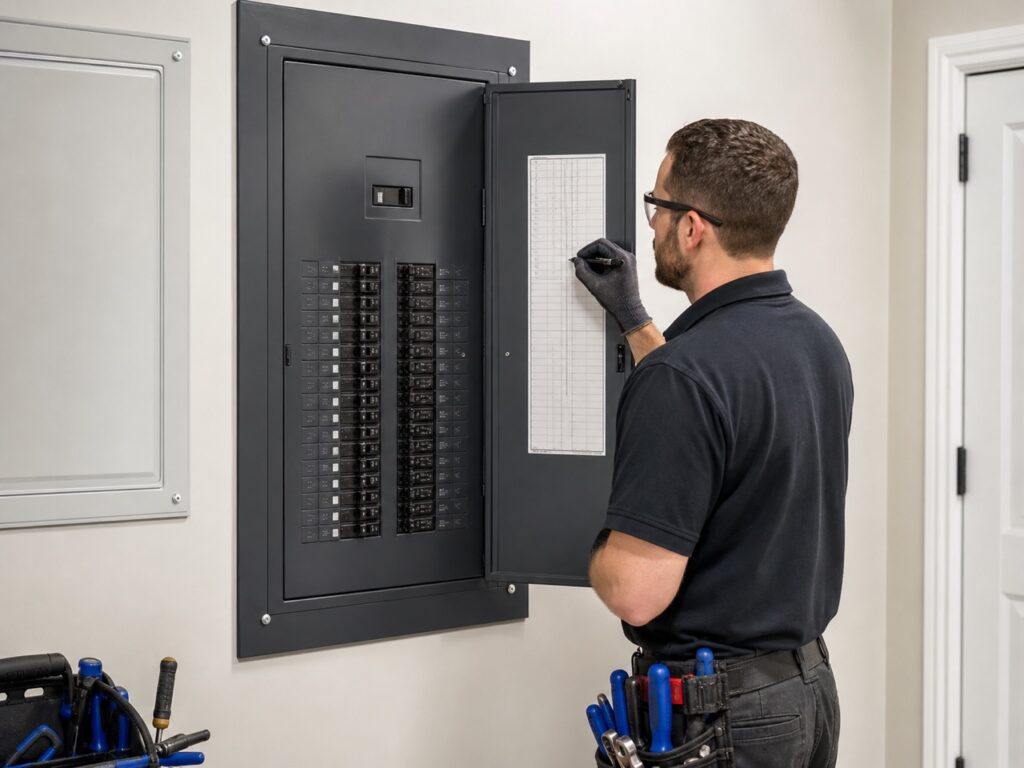
A panel assessment is not only a count of empty breaker spaces. It should account for the rating and condition of the service equipment, existing loads, large appliances, heating and cooling equipment, proposed additions, grounding and bonding, panel organization, and the physical route for new circuits. The electrician also needs to understand…
Electrical Planning Guides
Use these details before you hire an electrician
Prepare for EV charging and standby-power estimates
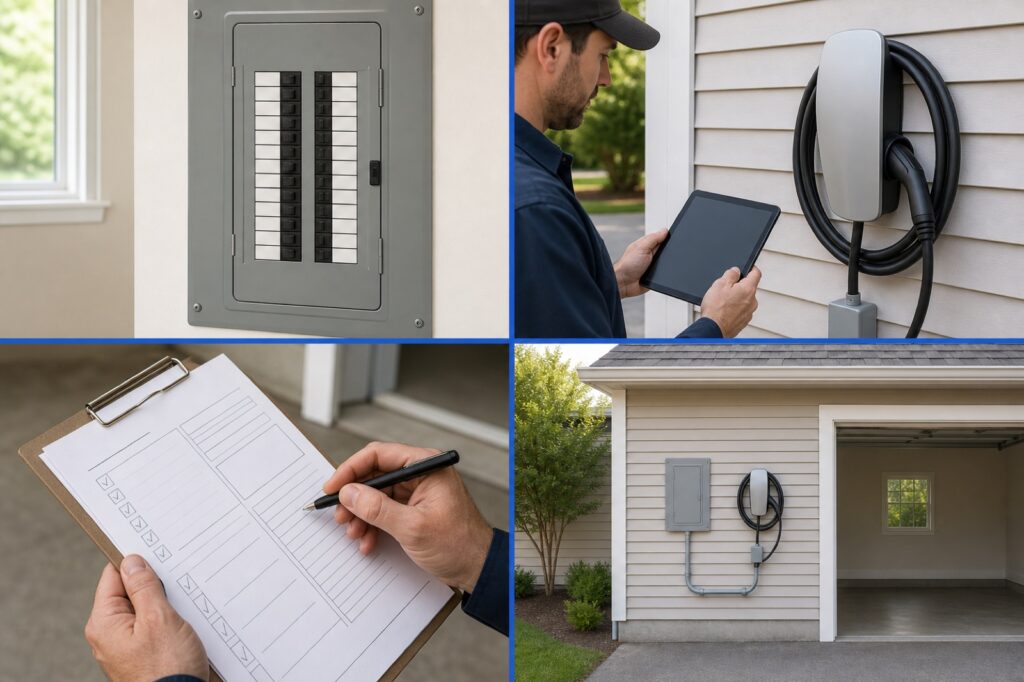
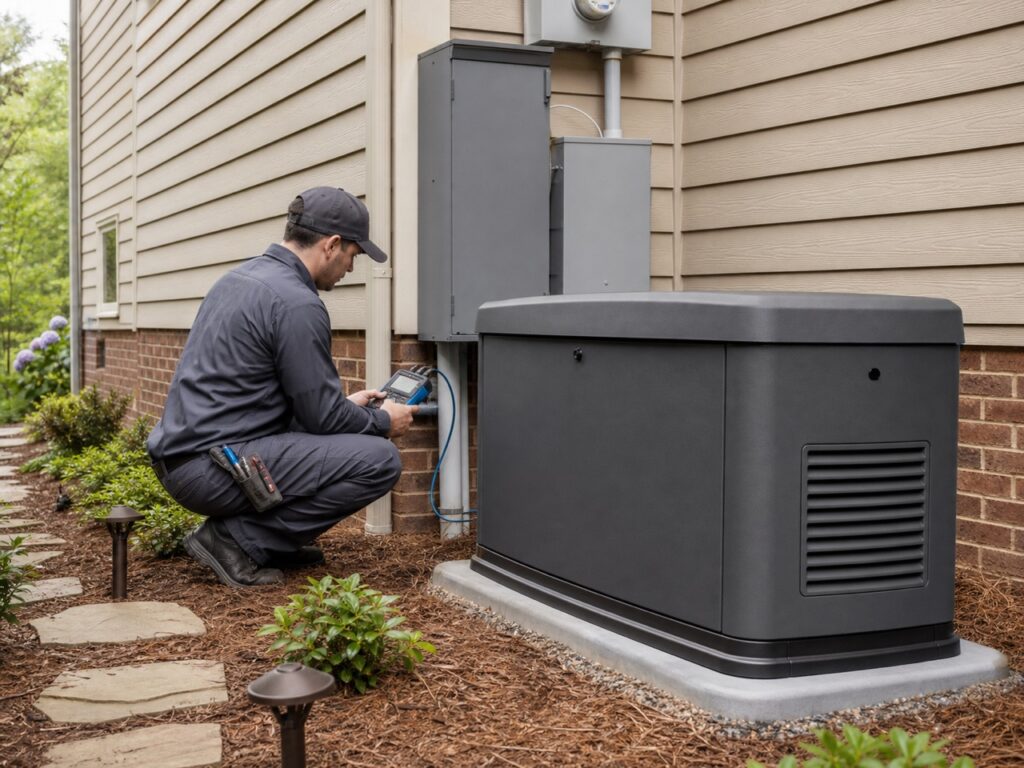
For EV charging, gather the vehicle's charging specifications, expected daily mileage, parking position, charger model if already selected, panel location, and whether the cable must reach more than one parking spot. The design must connect the charging goal to service capacity and a safe equipment location; the largest charger is not automatically the most useful choice. For standby power, list the circuits or equipment that must remain available during an outage, such as refrigeration, selected lighting, communications, medical needs, well or sump equipment, heating controls, or cooling. The project team then reviews starting loads, transfer equipment, generator location, fuel-trade coordination, sound and access considerations, and the maintenance needed to keep the system ready.
Compare the complete lighting or rewiring scope
A low lighting price may exclude controls, compatible dimmers, new boxes, ceiling repair, difficult access, fixture assembly, disposal, or adjustments after the fixtures are installed. A rewiring estimate can vary even more because contractors may assume different circuits, access methods, device counts, panel work, finish repairs, occupied-room sequencing, and inspection responsibilities. Compare the written scope line by line rather than only the total. Look for the rooms and circuits included, fixture or device allowances, control locations, expected openings, protection and cleanup, work by others, permit handling, testing, labeling, and closeout. Ask how concealed conditions will be priced and approved before extra work is performed.
Electrical Planning Guides
Questions worth asking before work begins
Keep the records that make future service easier
Permit requirements depend on the address and exact scope, so the authority having jurisdiction should make the final determination. For qualifying Arcstead projects, permit coordination and inspection scheduling are included, and the proposal identifies the expected process. Keep the final permit or inspection record, approved drawings when they exist, equipment documentation, startup or commissioning record, updated panel directory, circuit labels, and any warranty terms supplied with the work. For a repair, retain the diagnosed fault and the components or connections corrected. These records help a later electrician understand how the system changed and prevent finished work from becoming another unlabeled layer in the property.
Request the right service visit
Send the address, electrical concern or planned load, equipment information, and any drawings or safe photos already available.
Electrical Planning Guides: common questions
A single trip can still warrant attention, and a breaker that trips again should not be repeatedly reset. Heat, odor, noise, visible damage, sparking, or a hot panel calls for distance and professional help rather than further testing by the occupant.
Useful photos can include the affected device, visible damage from a safe distance, equipment nameplate, panel exterior, and readable circuit directory. Never remove a cover, reach into equipment, or approach a hazardous area for a photo.
Compare the service rating and equipment scope, load review, grounding and bonding work, utility responsibility, outage plan, permits, inspections, surge or optional items, labeling, finish repair exclusions, and closeout documentation—not only the panel brand or total price.
Know the vehicle, typical daily mileage, parking position, preferred charging schedule, and whether a charger has already been selected. The electrician can then relate the charging goal to panel capacity, circuit route, equipment location, and permit scope.
The local authority having jurisdiction makes that determination for a specific address and scope. Arcstead can identify likely permit needs and coordinate qualifying projects, but current municipal guidance controls the final requirement.