Common signs of a slab leak
Warning signs include a warm or damp floor, running-water sounds with fixtures off, a sudden pressure drop, moisture at the base of a wall, higher water use, or flooring that begins to lift or discolor.
Worker Websites Demo
Citrusline Plumbing is a fictional demonstration business. Service requests and chat messages are sent to Worker Websites for demo purposes. No plumber will be contacted or dispatched.


Concealed and under-slab leak assessment
Professional plumbing service
Warm flooring, water sounds when fixtures are off, pressure loss, or moisture near a wall can point to a leaking line under the slab. Citrusline uses non-invasive detection methods to narrow the location and then prices the practical repair or reroute options.
What we do
Warning signs include a warm or damp floor, running-water sounds with fixtures off, a sudden pressure drop, moisture at the base of a wall, higher water use, or flooring that begins to lift or discolor.
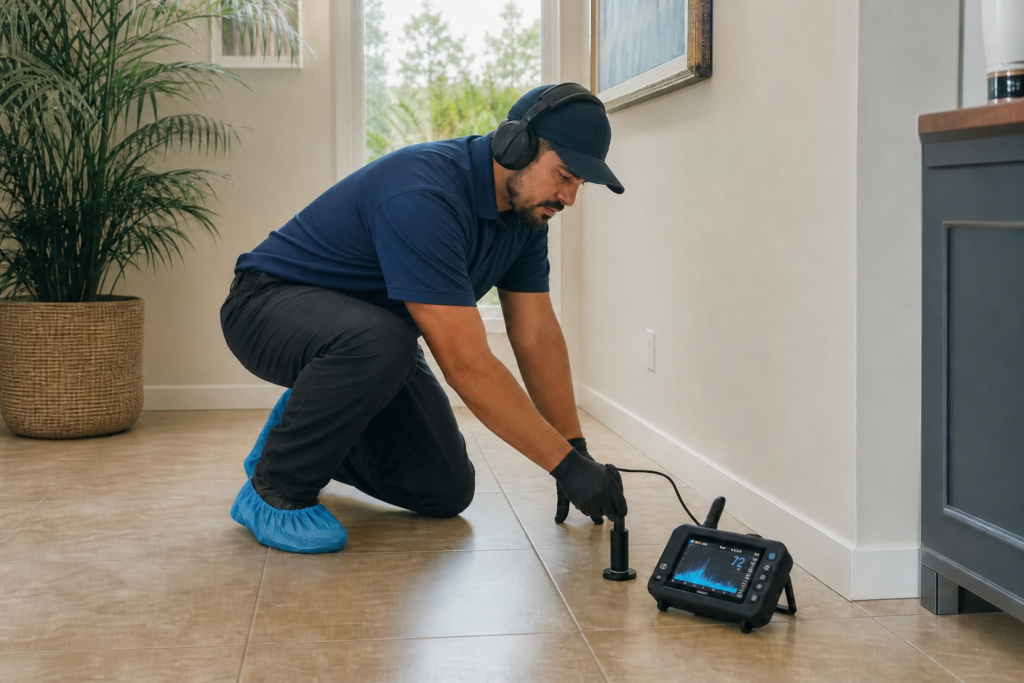
We use pressure isolation, acoustic equipment, moisture readings, meter checks, and the home's plumbing layout to narrow the affected line before opening a wall or floor. Once the leak is located, we show you where access is needed and how much material is likely to be removed.
A leak may be repaired through a localized opening, bypassed with a rerouted line, or addressed as part of a larger repipe. We show you the likely access, explain the tradeoffs, and provide written prices before the approved work starts.
If water is spreading, stay clear of wet electrical areas and damaged flooring. Shut off the main water supply when you can do so safely, then request emergency service. Citrusline's dispatch team answers urgent calls around the clock.
Helpful answers
Common signs include warm or damp flooring, water sounds with fixtures off, unexplained pressure loss, moisture at wall bases, flooring damage, and a higher water bill without an obvious fixture leak.
No. Sunlight, ductwork, and nearby equipment can also warm a floor. We combine temperature, sound, moisture, pressure, and the plumbing route before calling it a slab leak.
The initial inspection is normally non-invasive. An opening may still be required to confirm or repair the line, but locating the problem first helps keep that access as limited as practical.
Often, yes. A reroute can avoid opening the slab when there is a practical, code-compliant path through walls, ceilings, an attic, or another accessible area.
Same-day and 24/7 emergency service
Book online now. For an active leak, sewer backup, burst pipe, or no hot water, our dispatch team answers around the clock.